Thursday, March 22, 2007

Toronto Police U.S. Army searches for Joshua Key - UPDATED

Was wondering when this might happen.

from The Globe and Mail:

A war resisters' support group says Toronto police officers came looking to question a U.S. army deserter, and it accused police of doing the U.S. military's "bidding."

The Toronto-based War Resisters Support Campaign issued a press release yesterday saying that three plainclothes officers visited the home of a Toronto family on March 13 looking for Joshua Key. Mr. Key, 28, is a former combat engineer with the U.S. army who fled to Canada in 2003 after serving in Iraq.

The family gave Mr. Key shelter when he arrived in Canada four years ago. According to the group, the officers identified themselves as being with the Toronto police and said they wanted to ask Mr. Key some questions about allegations he made in his autobiographical book, The Deserter's Tale.

In his the book, Mr. Key describes several incidents involving American U.S. troops in Iraq, including one in which he says he saw soldiers playing soccer with the heads of decapitated Iraqis.

What exactly are they going to ask him? He's been here for FOUR YEARS and hasn't exactly been hiding out.

"Mr. Key, are you sure they were playing soccer with the heads? I mean, Americans hate soccer..."

My review of The Deserter's Tale can be found here.


[UPDATE: According to Friday's Globe, the U.S. Army's Criminal Investigation Command has confirmed it's looking for Key. The Star says the T.O. police have confirmed it has nothing to do with them.]

Wednesday, March 21, 2007

From who? to who cares? in record time

I did predict an Amy Winehouse backlash (which doesn't exactly make me Nostradamus), but I didn't predict it would begin before she'd even become wholly unobscure. (See here.)

Tuesday, March 20, 2007

Saul Bellow on chicken farms

From Seize the Day:
Wilhem had a queer feeling about the chicken industry, that it was sinister. On the road, he frequently passed chicken farms. Those big, rambling, wooden buildings out in the neglected fields; they were like prisons. The lights burned all night in them to cheat the poor hens into laying. Then the slaughter. Pile all the coops of the slaughtered on end, and in one week they'd go higher than Mount Everest or Mount Serenity. The blood filling the Gulf of Mexico. The chicken shit, acid, burning the earth.

"Saul, we like it, but we're thinking more something for the kids. Like a cartoon. Or, what is it – claymation..."

Monday, March 19, 2007

Grizzly man

Why does this remind me of this?

(Project Grizzly, by the way, is one of those movies I love but can't be objective about. Troy Hurtubise reminds me so much of some of the people I knew growing up that the thing barely registers as a movie. More like a vivid memory.)

Sunday, March 18, 2007

In the weeds

During a previous incarnation as the manager of a bar and a restaurant, I was told to hire the singer for this group, who was about 20 at the time, and – by sheer coincidence – the niece of one of the owners. She was a musician even then. Since about 80% of the staff were already musicians, actors, and painters, and our real need was for flexible, very available people who could fill in for others who were on tour, or on a leave of absence, or on a film set. Therefore, I suggested that hiring another working musician was not the best plan.

She got hired. And within a week, she was dropping shifts and telling me not to schedule her to work any weekends, the very thing she'd been hired for.

I have lots of similarly fond memories from that time when I was managing two separate places for around $1400 a month, with a newborn baby at home, and having to bus tables on Saturday nights just to bring in some extra money. Dealing with coked-up primadonna waiters of both sexes, two owners who had stopped talking to each other and were in the process of severing their partnership, and a restaurant that was empty most of the week while its sister bar thrived two doors down. And me all of about 24 years old. I think it was during that period that I first really took to punching walls and doors. It's become kind of a hobby during particularly stressful times.

My wife has some truly insane stories about her days as a waitress; my stories are mostly pathetic. One I'm still fond of is about the busboy who managed to get wildly drunk and stoned on his training shift. About halfway through the evening, I found him sitting at the bar drinking a pint he'd apparently poured himself while the place fell into chaos around him. "You can't sit there and drink when it's busy," I told him, and watched with amazement as he nodded, then stood up to continue drinking. (I'd told him he couldn't sit there, right?) He also managed to go home with the bartender's keys (but not the bartender).

As I fired him the next day (something I had to do a lot, and which, I will admit, didn't always make me feel bad), he tearfully pleaded with me to tell him what he'd done wrong.

"Well, I would suggest that at the next place you work, you don't get shitface on your training shift."

"But the cook and the waiters were out there smoking up, too!"

"Ok, another thing I would suggest is that you don't start ratting on your fellow employees before they're even, you know, your fellow employees."

Wednesday, March 14, 2007

Reviewing

Oh, for god's sake:
I've heard about writers reviewing to return a favour, reviews written in revenge, authors so devastated by a bad review that they never wrote again. When you think about it, reviewing's a pig of a job. Someone else's years of hard work given over to an amateur, a fellow novelist with an (always strong) opinion in a very small town where everyone knows everyone else and there are thousands of overlapping agendas. Think about that next time you volunteer.
Think about this: fuck off.

A journalist friend told me about reviewing an Elmore Leonard novel negatively, then meeting the author a few months later at a literary festival. The critic found him dignified, charming, and modest, writing and speaking with as much care and professionalism at 84 as he'd done for the past 50 years. The flaws of the novel seemed suddenly insignificant, my friend told me, and he felt ashamed.

What if Leonard turned out to be an arrogant prick? Would the flaws of the novel suddenly become more significant?

Given all that, you just know what's coming...
Nowadays, I only review books I really like. It's cowardly, I know, but I figure it's not my job to make people unhappy. I'll leave that to the professionals.
There it is again: the "mean people suck" school of literary criticism. (More of that here.)

Reviewing can be a pain in the ass, and it can be tough to know that what you are writing will ruin someone's day/week/year. And yes, there are a lot of irresponsible or ill-equipped review(er)s out there, on both sides of the positivity fence. But how many times must this be said: if the only books that get reviewed are the ones the reviewers "like," then logically, the books getting ignored are the ones nobody "likes." All a "nothing but blue skies" approach does is relieve such reviewers of ever having to declare why they don't like said books. Which is an odd power to hand to a bunch of "amateurs."

The Host with the most (or at least more than enough)

Watched The Host last night – it's not out in theatres yet, but Suspect Video has a fairly undodgy-looking copy on DVD. I rarely go into new movies with the right level of expectation. I either expect too much (as with Borat, which I was pretty thoroughly disappointed with, despite the seemingly contradictory fact that it made me laugh a lot), or too little (as with The Departed, which ended up being a lot of fun, even with Nicholson doing his worst Nicholson impression all the way through. He's the new Jack Palance!).

With The Host, I was fully prepared, thanks to Gary Butler, who told me it is "the best monster movie since Jurassic Park." With that, I knew I was not going to be getting the usual Asian extreme stuff, with creepy children or long-haired, contortionist ghosts or haunted handicams. I was expecting something more like smart, early Spielberg*, and that's what I got. Even the fact that the monster gets shown in full-light throughout – usually a no-no, see: Jaws, the death of Quint – is not a problem, nor is the fact that the movie has a few children-in-peril scenarios, which can be a deal-breaker for me if at all gratuitous – that is, if I can almost hear the childless director or screenwriter giggling from behind the camera.

This one won't haunt your imagination for months or anything like that, but it's worth it. Sometimes, all you can feel is gratitude when a movie does everything it needs to and just a little more. (That sounds like faint praise – it does a lot more.)


* not that Jurassic Park has much in common with smart, early Spielberg, aside from a couple of early scenes. Of the three Jurassic movies, I actually prefer the "worst" one, the third. (Which wasn't even directed by the man.) It had the virtue of being one long chase scene, with only brief pauses to moralize.

Monday, March 12, 2007

Me & Mrs Winehouse - UPDATED

Shaun Smith just told me that Amy Winehouse is on Letterman tonight. And me without cable. (Though I'm sure it'll be on YouTube within a couple of days.)

Here's a new Popmatters review of Back to Black. I think the charm of the record will eventually wear off, but for the moment, I continue to get the emotional equivalent of an erection whenever I listen to it.

[UPDATE: Bingo! Bit of a stilted performance, though - sounds as though she's singing a ballad while the band is Northern Souling it. She warms up about ten seconds before the end. Great clapping, though.]

Like a broken MP3

Lysaine Gagnon makes a valiant effort to update a cliché in her column in the Globe. (subscription req'd):
Mr. Charest is using the same arguments as in the 1995 referendum [...] while the PQ, just like in 1995, talks about the cheerful days that would follow a Yes vote. All in all, it sounds like a scratched CD. [emphasis mine]
Actually, a scratched CD sounds like dit-dit-dit-dit-dit-dit-dit-dit-dit-dit-dit-dit – which would be a very interesting thing for a provincial election to sound like.


[UPDATE: Just realized that Gagnon, if she was really insistent on a compact disc simile, could easily have written "it sounds like a CD player on repeat," which not only would have updated the cliché, it would have improved it, or at least made it more accurate, since a broken record only loops a few seconds' worth of sound, while a CD on repeat starts again at the beginning an infinite number of times. Can I have a Globe column now?]

Thursday, March 08, 2007

Tough guy

Went to the Writers Trust awards last night. Was mercifully well-managed and painless to watch. (The awards ceremony, not me.) Kenneth J. Harvey won the big fiction prize for Inside, a novel I reviewed for the Toronto Star last year, and which more and more people keep mentioning to me as their favourite of the year.

I said hello and congratulations, etc. to Harvey after the ceremony, and he was gracious enough to thank me for my review (which, though mostly positive, took a few shots at Harvey's self-consciously maverick tendencies, most of which he has dropped, I think). He even said he'd heard I was "a tough critic," which briefly warmed the cockles of my cold, shrivelled heart. Of course, by "tough critic" he may have meant "complete asshole." Most do.

Either way, it was good to see a good book win.

The brown, walnut-stuffed condom gets them every time

My stats just went crazy over the past couple of days with people all over the world (literally) coming to this page.

Has interest in photos of a young, brown Schwarzenegger suddenly spiked, or are we in the middle of global Clive James-mania?

Any ideas?

Wednesday, March 07, 2007

When supply outstrips demand, talent

I'm out of it at the moment, so please go read Zach Wells on the funding structure that encourages what he calls the "hyperthyroidal" publishing of Canadian poetry.

The obvious counter-argument is that, if anyone with a working Return key and a nature encyclopedia (two essential tools in the creation of poetry, as far as I can tell) can get published, then at least there is little chance of a genuinely talented poet going completely unbound.

The counter-argument to that is that who would even notice a talented poet within such a river of crap?

The counter-argument to that is that talent will out.

The counter-argument to that is... will it?

To which I answer, "Who cares? We're talking about poetry here, for god's sake."

Friday, March 02, 2007

First you say "awww," then you say "oh."


from the story:

The exceptional friendship will likely be short-lived, said veterinarian Retno Sudarwati, because as the animals grow up their natural survival instincts will kick in.

"When the time comes, they will have to be separated. It's sad, but we cant' change their natural behavior," she said. "Tigers start eating meat when they are three months old."

In this case, "meat" means "monkey."

Wednesday, February 28, 2007

"And he hold the mic and your attention like two swords"

The cover for Gareth Hinds's new graphic novel adaptation of Beowulf:


The cover of Madvillainy by Madvillian (aka MF Doom and Madlib):


Compare and contrast. Then go listen to Madvillainy.

Tuesday, February 27, 2007

How to read and why

Sorry, that title was meant as a question – it should have read How to read, and why?

(It sounds best if read in a vaguely Eastern European accent.)

I'm in one of those strange troughs when – the books I have to read (for money) piling up next to me, and the time I have in which to read them running at just above zero (along with my woebegotten attention span) – I will actually pick up unread books and flip through them with a kind of morbid amazement that such things actually get read, that people all over are doing nothing other than sit for hours in one place, reading, and that – most amazing at all – I was ever one of those people, and will one day be one of them again.

Who the fuck reads?

These are the times when, with half-an-hour or so in which to read, I will pull book after book off the shelf, looking for the one. I will veer between rejecting genius out of hand for an arguably inappropriate adjective in the first paragraph and standing in awe of mediocrity for the outsized miracle of putting together sentences, paragraphs, a whole novel. All this while the books I am actually supposed to read sit fat and formidable on the floor beside the couch or weigh down my knapsack like little corpses.

I've actually caught myself standing in my son's room, scanning his bookshelf with growing annoyance. For christ's sake, I come close to telling him, if I could get away with reading War of the Worlds over and over again, or Jack London or something, I totally would.


No, I probably wouldn't, cuz then I'd be like one of those people who read Harry Potter on the subway, and those people are pa-the-tic.

Monday, February 26, 2007

The world the Toronto Sun shines on...

... is a much simpler place.

(Clearly, they're going after that crucial 65-75 "cranky retiree" demographic.)

Friday, February 23, 2007

Young snobs in love

Jacob Richler* knows which fork is used for dessert, what wine to serve with fish, and, most importantly, how to treat a lady.

The proof is right here in his Valentine's Day column, in which he advises readers who are "happily equipped for the occasion with a foxy date of some variety" on what to cook. You see? He has barely begun and already I'm hotter than a fresh jalapeño in July. (It has to be really fresh, however, or else serve it to the dog.)

First up, caviar:
It is, of course, not especially surprising that a species with the misfortune of having its unborn young unanimously anointed by the planet's most voracious eaters as its alltime favourite snack would, sooner or later, end up in an uncomfortable spot.But the good news is that the scientists at the UN's Convention on International Trade in Endangered Species (CITES), which last year imposed a total ban on fishing in the Caspian, has recently revisited the issue, poring over the numbers and analyzing the data. They have heard Mother's Nature's message and found it loud and clear: The gist of it is that you better eat as much caviar as you can while there's still time?

So earlier this month CITES lifted its ban and invited the five Caspian- bordering states of Azerbaijan, Iran, Kazakhstan, Russia and Turkmenistan to go for it and plunder another 96 tonnes over 2007.

A dubious decision to be sure. But I've thought the issue over very carefully and the fact is that if five or six ounces of that 96 tonnes ends up in my belly instead of someone's elses [sic], I will not sleep badly, but better.

It ain't romantic unless you're contributing to the endangering of a species. Bring on the seared Panda paw!
So I will definitely be starting things off on Valentine's evening with a little tin of the Caspian's finest and a few shots of frozen Polish vodka. And I advise you to do the same -- not just because it tastes so splendid and luxurious but also for its aphrodisiac qualities, which in this case I suppose come down to imagery: On a night expected to finish up with an activity occasionally associated with producing offspring, it just feels right to kick things off by eating someone else's.
I know whose house won't get trick-or-treated by my kids this Halloween. Who knows when Jake might be feeling frisky?

Oysters come next:
But to my way of thinking, the notion of aphrodisiac content is dodgy, and what's more, food in itself is never actually sexy. It's the way we eat it -- and watch others do it -- that starts those juices flowing. And this is where the oyster delivers its tantalizing final message about the person who has just set about eating it alive: Anyone who is eager to slurp up something that looks like that will obviously slurp at just about anything.
Did anyone else just throw up in their mouth just a little?

And on to foie gras:
Searing the fresh stuff is dead-easy, I promise you, and there is nothing quite like looking across a table at the right pair of lips glistening a little from a few stray trickles of its incomparable fat.
Is he allowed to write this kind of stuff in a family newspaper? Please no one tell Jake about nyotaimori....

Although maybe it's Jake's restraint that makes these columns always seem a little off. Maybe full-on decadence is the way to go. He should convince The National Post to send him on a three-week sex tour of Thailand. Report on the quality of the food being served in Dutch brothels. Advise us what scotch goes down smoothest in the game room after a day hunting the most dangerous prey of all.

Where were we? Oh right, Jacob was preparing to ravish us:
But now it really is time to break out some hot food.
Gosh, Jake, look at the time...
Me, I'm thinking of a small bowl of consomme -- quail, maybe -- with a delicate little ravioli floating on top...
I have to work in the morning...
...and a single raw quail egg-yolk floating on top, because I like the way it bursts so delicately on the tongue, and knowing that it will be doing the same on someone else's, too.
Really, you're a sweet guy, and everything...
Better yet, snow crab are in season, and they are divinely delicate and sweet. Either meal leads to a happy scene of the savage dismemberment of the very recently expired accompanied by lots of licking of buttery fingers.
Taxi!


(*Yes, I know it's becoming something of an obsession. What can I say? I'm like a prospector: I'm only interested in the gold.)

A first step back toward sanity

Supreme Court overturns anti-terror security certificates.

Please mark the occasion by sending a few dollars to The Campaign to Stop Secret Trials in Canada. They've been on this since the beginning, and have endured a lot of shit for it. As far as I understand, a lot of the money they take in goes to helping out the families of the incarcerated men, so it's even more worth it.

Thursday, February 22, 2007

The worst writers of their generation: a second look

I am little baffled as to how Charles Foran could write a whole essay about a whole generation of consumer-society-obsessed American novelists (D.F. Wallace, Rick Moody, Jonathan Franzen, Lethem, etc.) and not mention either Don Delillo, who did all of it before and continues to do it, with arguably diminishing returns, or Dave Eggers, who has – like a millionaire stockbroker who has a heart attack and becomes a Buddhist – seemingly broken through all that literary white noise to some self-consciously tranquil place of clarity and love. (Maybe for the worse.)

Foran also, astonishingly, makes no mention of critic James Wood, who covered all this fairly exhaustively, most notably in a series of review essays on people like Franzen, Delillo, and Zadie Smith. (Remember "hysterical realism?")

I'm also not certain what Foran's point is here. That the work of American writers who were all the rage seven or eight years ago is not aging well? That Infinite Jest was maybe a little hollow? Knock me over with a feather. And what's with that shoehorned-in bit about Canadian writers? ("There may even be a link between the impulse to remain oblivious to the textures of material existences north of the forty-ninth parallel and the tendency in Canadian novels to steer clear of formal crisis. Keep the messiness at bay and you can keep the stories tidy.") It's not as though I disagree – Canadian books that "remain oblivious to the textures of material existences" are the windmills I most often choose to tilt at – but it feels like a non-sequitur as it is. The rest of his essay argues that these American writers have come to an imaginative dead-end.

Perhaps Foran is suggesting that, even if it leads nowhere, the frantic chase after some illusory vision of the world is at least better than most of what we get up here, which is more like the preemptive renunciation of such a chase. I wish his whole essay was about that.


(NOTE: You may need to register for a free month's trial to read the article.)

Monday, February 19, 2007

Lie down with Mark Steyn, wake up with fleas

As a kind of follow-up to David Solway's love letter to Mark Steyn, I offer you this. Here is the man Solway has called "intrepid and politically incorrect":
In a democratic age, you can’t buck demography—except through civil war. The Serbs figured that out—as other Continentals will in the years ahead: if you can’t outbreed the enemy, cull ’em. The problem that Europe faces is that Bosnia’s demographic profile is now the model for the entire continent.
It would flatter Steyn too much to be called "politically dangerous," so I'll only say that I fully agree with his being "politically incorrect." Certainly, the "incorrect" part is a label Steyn has earned over and over again.


UPDATE: Steyn now says that this passage is being misread by crazy-headed peaceniks who are always looking to twist his sensible words into something ugly.
My book isn’t about what I want to happen but what I think will happen. Given Fascism, Communism and ethnic cleansing in the Balkans, it’s not hard to foresee that the neo-nationalist resurgence already under way in parts of Europe will at some point take a violent form. That’s pretty much a given. Indeed, Ralph Peters and I have already argued about this: the difference between us, as I explain here , is that I think any descent into neo-Fascism will be ineffectual and therefore merely a temporary blip in the remorseless transformation of the Continent.
See? All he was saying is that white Europeans will eventually recognize that they are being overrun with Muslims, and so will turn on these dark invaders, but that it will all be in vain – Western Civ is done for. What so objectionable about that?

As an astute (though Godwin's Law-flouting) commenter at Sadly No! puts it:
You know, if they aren’t advocating genocide as a means of solving the Jewish Muslim question, then what exactly are they advocating anyways? To my knowledge there isn’t a product on the market called, “I can’t believe it’s not genocide.”

Manly book articles for manly book magazines

When Toro magazine went down last week, it took two articles I'd written for them with it – one on Brad Smith's Big Man Coming Down the Road (for the March issue) and one an interview with Robert J. Sawyer (for the April).

The Sawyer piece is still looking for a home, but Toro has decided to make its March issue, which was never sent to the printers, available as .pdf download.

Get it here.

(A thought: do all men now have to have that dopey-looking swoopy Big Boy/Tin Tin thing going on at the front of their hair?)

Friday, February 16, 2007

Camille Paglia and Sting: a bonfire of the vanities

Two brilliant puncturings of two brilliant egos.

The first is Stephen Metcalf's perfect – perfect – assessment of Sting in Slate:
For the better part of 20 years as a solo artist, the King of Pain has been locked in a Mexican standoff with the rest of humanity. We refuse to believe that he is deep; he refuses to believe he is shallow. Nothing—no amount of sniggering on our part, no amount of Elizabethan luting on his—has broken this impasse. High-minded self-regard has been to Sting's star image what groupie-defiling sex once was to Led Zeppelin's. Maybe this is why Sting, still a ludicrously photogenic man, has never looked anything less than stupid on his dozen or so album covers.
Everything in that piece is quotable.

The second is a close look at Camille Paglia's first column for Salon in six years.
Vicious insults to the English language: 3 (”enthused” is not a word, with good reason; “surfeited” means that there’s “more than enough”, you don’t then have to tell me; “drearily prolix” is the worst two-word phrase I’ve ever heard in my life, and I’ve read Camille Paglia.)
(Read Paglia's column here.)

Never, never say there is no place in the world for first-class snark.

Wednesday, February 14, 2007

Vendela Vida and the hothouse flowers


Last Wednesday night I went to the Gladstone Hotel to catch the tail-end of Sheila Heti's interview with Vendela Vida, aka Mrs Dave Eggers. I arrived in time to catch Vida's quiet, pursed-lip denouncement of those mean, mean reviewers and critics who get mad at books, who treat badly written books like crimes against humanity.

I spent the rest of the interview in the bar next door.

To her credit, Heti pushed back a bit against the idea, saying that this kind of anger was admirable in a way, that it was just part of human nature, that it at least showed a passion for books. For her efforts, she received an icy response from Vida: "So you want more of it?", as if Heti had just tried to defend actual lynchings.

I've never been able to understand this notion that books require delicate handling, that authors should never be exposed to harsh criticism, lest they wither and die. If you read and listen carefully when this kind of argument is made, it becomes clear that the crime isn't in holding such harsh opinions, only that they get expressed publicly. Privately, they are quite willing to say how much they hated this or that book, or how this or that author is an arrogant fraud. I've often heard that bad books should simply be "ignored." Which is a perfectly WASPish idea. Literary criticism, then, would be reduced to the two options: the gush or the snub. (And what if bad books don't get "ignored?" What if they win awards? What if they are presented as the cream of the crop? Do we all just sit on our hands and wait for it all to blow over?)

They may even push the envelope a little in public, admitting that, yes, many books that are so-called "masterpieces" are actually trite and dull and hackneyed and all the rest of it. As long as no names are mentioned. That way, you get credit for being a maverick, without any of the risk.

So who are these opinions being kept from? Well, readers, for one. Or rather, bookbuyers, meaning this isn't a philosophical or aesthetic position at all, but an economic one. Some people are fairly explicit about this, saying that since films are a multi-trillion-dollar industry, a bunch of wags trouncing shitty films online and in newspapers doesn't really matter. Poor little literature, on the other hand, barely scrapes by, so we mustn't let the public be discouraged from spending their much-needed dollars even on terrible or overrated books. Giller winners float all boats, or something. And, as people say when parents complain about their kids reading trash or comic books, at least they're reading.

Others – such as, I assume Vida herself – would become even more icy and purse-lipped at the idea that they are arguing that sales take precedence over honesty.

Friday, February 09, 2007

David Solway and Mark Steyn: the West has jihad it!

In the December issue of Books in Canada – the one with that 27,000-word (!!) defence of Conrad Black – there is a review by poet David Solway (also an associate editor at BiC) of Mark Steyn's America Alone. It's a doozy.

Solway wastes no time calling Steyn "intrepid and politically incorrect" – so almost immediately, even somebody with fading batteries in his bullshit detector should know what he is in for.

Solway chastises squishy-liberal rags like, um, the Globe for not taking seriously Steyn's message, which is essentially that (American) might makes right, and that unless Judeo-Christians start breeding faster than the ullulating hordes, we're going to be up to our ears in car bombs and burqas. Solway also makes clear he's with Steyn on the idea that "moderate" Islam is only vicious, murderous jihadi Islam with a smiley face.
In this view, the term "Islamic fundamentalism" is a kind of tautology. Since Muslims believe the Koran is the literal word of Allah which pronounces on matters both sacred and profane and governs their conduct in the world, it follows that all genuine Muslims are by definition fundamentalists who, as Muslims, must consent to the indivisible unity of religion and politics. "Moderation" merely provides the framework within which the ostensibly "extreme" forms of Islam can prosper and, so to speak, receive scriptural asylum. For Steyn and his congeners, the distinction we like to make in the interests of political correctness between Islam and Islamism is a specious one.
So the problem is that Muslims "consent to the indivisible unity of religion and politics?" Given that the U.S. had an Attorney General for five years who used to anoint himself with cooking oil and who once said "I don't particularly care if I do what's right in the sight of men. The important thing is for me to do right in God's sight. . . The verdict of history is inconsequential; the verdict of eternity is what counts," I'm guessing that Solway used up all of his appreciation for irony in his poetry.

The whole thing is worth reading as well as marvelling over for its breathtaking ignorance and naïvety. The best part, for me, comes right near the end:
For the decadent benevolism of the modern state deprives the individual of his autonomy and thereby infantilises him, reducing him to a supine appendage on a vast administrative organism. If we do not recover our backbone as responsible citizens, we will find ourselves living in an invertebrate world that is no match for a supple and aggressive antagonist who has our demise at heart.
Or, as Steyn himself says: "The majority can never replace the man. And no more than a hundred empty heads make one wise man will an heroic decision arise from a hundred cowards."

Oh no wait, that was Hitler, who also said "Mankind has grown strong in eternal struggle, and only in eternal peace does it perish." Which is not at all akin to Solway writing that
by expropriating many of the basic "functions of adulthood," the welfare state has proceeded to neuter its citizens, creating an inverted pyramid or Ponzi scheme in which fewer children support more and more oldsters while simultaneously sapping their will to confront an implacable adversary.
Actually, to be honest, it wasn't the image of Hitler that kept coming to mind while reading Solway's review, it was the one below:

Thursday, February 08, 2007

Wednesday, February 07, 2007

Mordecai weighs in

Following up on a debate about arts grants over at Bookninja that reminded me never to yell "fox!" in a crowded hen house, I wanted to post this, an excerpt from a Quill & Quire interview with Mordecai Richler from July 1989:
Q: You have said that in the 1960s all of CanLit could have fit into a taxi, but now we’d need a Canada Council minibus.

A: I think the Canada Council is a pretty good thing – certainly they gave me some very valuable help when I was a young writer. The Canada Council is like betting: you give so many young writers a couple of grants and maybe one out of 10 hacks it after a while. But I’ve been on those committees and I do object to people who send a bucket down that well year after year. I find that distasteful. If you’ve written three or four novels and are stil looking for a grant, there’s something wrong.

Q: At some point writers should support themselves through their work?

A: Or get a job.


(I freely acknowledge semi-intentionally plagiarizing this exchange in one of my comments over at the 'ninja.)

Tuesday, February 06, 2007

Martin Amis in search of gravitas

A smart essay on Slate about Martin Amis's recent slide away from satire into puffed-up moralizing.
In our own time, no writer has been so obviously, so publicly confused by his warring impulses—to observe what he sees on the one hand and to moralize on it on the other—as Martin Amis. He has written works of corrosive satire almost breathtaking (and breathtakingly funny) in their nihilism (Money and The Information), but he has also, especially of late, written works of a weirdly moralistic bent, denouncing such people as Stalin, Mohamed Atta, and male chauvinists who write abusively about women for the porno-tabloid press. It was as if the rich material he had been handed by life—the world of the high-British, high-Postmodern, Baby Boomer elite—was too flimsy, and he needed sterner stuff. Perhaps it is just the perceived weightlessness, these days, of being British—in the best post-imperial novels of Martin's father, Kingsley, being British consisted primarily in getting scrupulously drunk. (Martin's innovation, in his best novels, was to get his characters drunk and send them to America.) The political critique of the son's refusal to take his own people seriously would be that it implicitly ignored the damage they were doing to the world—even in America, after all, their intellectual support of the Iraq war (including in these Internet pages) was not without effect.
Catch that dig at Christopher Hitchens at the end there?

Sunday, February 04, 2007

No kibitzing

About three-quarters of the way through Philip Marchand's review of the new Guy Gavriel Kay there is a brief digression on the topic of witty banter in fiction:
Kay tries to give [his characters] an even more sympathetic cast by having them constantly joke and banter with each other. In several years of reviewing novels, many of which also try to capture an atmosphere of kidding around, I have never seen it work. Kibitzing just doesn't travel well onto the page.
It's true. From my own experience, the first draft is the one where no one talks – characters are merely embedded, like raisins in a cake, within big, doughy rolls of description and exposition. In the second draft, in an effort to liven things up, everybody has long, jokey, self-aware conversations that go on for pages and that repeatedly shred the tone. In subsequent drafts, this gets cut back ever further until, at last, the rule that characters (and people) are funnier when they don't know they're being funny re-asserts itself.

It's a tricky thing, having a character be intentionally funny – a tricky thing not to let that joke be merely one the author is telling the reader.

Another thing: I've read a fair number of sci-fi, thriller, and mystery novels in the last couple of years (mostly because I was paid to), and, like Marchand, I often found myself annoyed at the jokey, sub-sitcom tone that overtakes a lot of the dialogue. It's a mood-killer every time. I think there is a way to represent the very real influence that sitcoms and the like have had and continue to have on the way a lot of people speak, but in most of the cases I'm referring to, it was clear the author meant for the reader to come away thinking those characters were "funny." I think it only ever works if the author is able to contain a character's "funniness" within a cloud of negative capability; in other words, leaving room for the reader to not find the character funny at all, or to find that it's the character's very funniness – or the attempt to be funny – that is funny, not anything he/she actually says. Does that make any sense?

Thursday, February 01, 2007

That book's got issues

from a story in the Toronto Star about Peel's Catholic school board pulling Snow Falling on Cedars from high school library shelves:
The novel, written by David Guterson, centres on the murder trial of a fisherman charged in the mysterious drowning of another in the 1950s. The story explores many issues, including lingering racism after World War II – the accused is Japanese-American – in a community that saw many of its residents sent to internment camps. [emphasis mine]
"Exploring issues": the prime directive of every work of fiction. Novels are just like little therapists, but you don't have to pay by the hour!

This whole thing is massively stupid – not just because it has managed to give the Peel school board about a year's worth of terrible publicity and has made them all look like yokels, but also because every kid in that school and elsewhere is going to immediately go out and get a copy of the stupid thing, looking for the dirty stuff that got it banned in the first place.

Not to mention all the time, money, and energy that now has to go into defending that yawner of a book. Can't they just ban Lolita again?

Tuesday, January 30, 2007

Alberto Manguel vs the philistines

In the same issue of Geist that has Stephen Henighan’s bizarre take on the Gillers, Alberto Manguel has a column in the form of an open letter to novelist George Szanto, apologizing on behalf of our crude and vulgar culture for not valuing him more. (Szanto is apparently having a hard time finding a publisher for his new novel.)

For a long time, Manguel has been revered as a specimen of all-but-extinct breed, the man of letters. Certainly in Canada, where such a species never flourished, editors fall over themselves to offer up column inches for him to fill with the warm, cask-aged tones of capital-C Culture.

It is not to dispute Manguel’s intelligence, the fact that he is astonishingly well-read, or that he is utterly sincere in his devotion to art and literature to say that he drives me right fucking nuts. Manguel’s voice is that of the slippered classes – calm and dispassionate, preferring reflection to fevered inquiry or debate; firmly “spiritual” without being, you know, religious; always favouring the colourfully exotic to the homely homegrown or the unnervingly foreign. Manguel, however involuntarily, is the champion of the kind of writing and culture that Q.D. Leavis classified in Fiction and the Reading Public as being a kind of middlebrow daydream, the kind of writing that eschews all thoughts of genuine transcendence or painful self-awareness for vague dreams of being “slightly better.” Slightly richer (though slightly less concerned with money and material things), living in a slightly more interesting city/country/hemisphere, slightly more knowledegable about art and history and wine, slightly better-read, slightly more attuned to amusing ironies, and slightly more alarmed by signs of creeping philistinism.

Creeping philistinism is the theme of Manguel’s column. Creeping philistinism – or maybe that’s rampant philistinism – is the reason Szanto’s book has not found a home, according to Manguel. Publishers, he reveals, are now turning down books by writer-friends of his “for anything but literary reasons.”

I can sympathize, and it’s obviously true. Even publishers that are not looking for outright moneymakers are looking for books that “fit” – with a tone, a subconscious set of aesthetics, or merely a sense of what a book should and should not do. (The problem is in determining whether or not 'twas ever thus – I lean toward "pretty much, yes.")

Manguel goes further to castigate the general culture for being ignorant, firstly, of literature outside of English.
Having once been the keen discoverers of Kafka, Camus, Sartre, Unamuno, Neruda, Dürrenmatt (in the first half of the twentieth century, for instance), English-speaking readers locked themselves into something worse than an imperial mentality, since at least the Empire forced them to look outside England: a state of stolid contentment.
And so we're stuck reading bangers-and-mash-eaters like Borges, Marquez, Günter Grass, Heinrich Boll, Italo Calvino, Isaac Bashevis Singer, Primo Levi, Roland Barthes, Thomas Bernhard, Michel Houllebecq, Haruki Murakami, Gil Courtemanche, and even Tolstoy, whose Anna Karenina was an Oprah pick...
Readers and writers in English today know practically nothing of what is taking place in the cultures of the rest of the world. Step into a bookstore in Bogotá or Rotterdam, Lyons or Bremen, and you can see what writers from other countries are doing. Ask in Liverpool, Vancouver or Los Angeles who António Lobo Antunes or Cees Nooteboom are (two of the greatest living authors, the first Portuguese, the second Dutch) and you will be met with a blank stare. But such a question would probably not be asked, because English-speaking readers have became prisoners of their own language, living off whatever the publishing industry chooses to feed them.
Um, António Lobo Antunes? Cees Nooteboom? Manguel has obviously travelled a lot more than I have, but I still get the feeling that if I walked into a bookstore in, say, Bogotá and ask to be shown to the Cees Nooteboom section, I would be met with a similarly blank stare. I'm assuming Manguel reads both Portuguese and Dutch, and therefore is qualified to bestow "greatest living authors" honours. This goes back to the preference for the exotic – Manguel is of the school of thought that holds that literature's primary duty is to reveal how others live. But what about showing us to ourselves? How is any author "great" if his work says nothing to us, even across the gulf of translation? (And no, I'm not arguing that readers are better off staying within their own language, though many other very intelligents critics have made this very assertion.)

(Added: this also puts Manguel firmly on the side of those who believe that literary greatness is self-evident and requires no argument or evidence or re-evaluation; it's a kind of visible glow that authors take on and never lose – if we can't see it, then we're no better than illiterates. What if you've read their work, and made every effort to understand every allusion, uncurl every local irony, and been patient through every bit of alien-seeming indulgence or opacity, and you still don't like it? What then? Are you a lost cause?)

From hereon in the generalizations get truly sweeping:
Even the literature written in English has become, by and large, watered down to canteen fare. Of course there are many exceptions, and great writers are writing superb literature all the while, but they work in an atmosphere of intellectual numbness.
And we’re all hypnotized by television, and music today is just noise, and no one knows how to make a proper risotto anymore, etc, etc… In what decade was this an original thought? (By the way, I’m not sure I’ve ever been in a canteen, but I’m guessing the fare available in one is not characterized by its excessive water content.)
Bloomsbury, the publishers who once boasted Nadine Gordimer and Margaret Atwood on their list (though those now “safe” modern classics are still published by them), bring out Jane Austen and Charles Dickens in editions for an illiterate audience with cute introductions by bestselling “chick-lit” novelists such as Meg Cabot, of The Princess Diaries fame. Cabot writes: “OK, so I’ll admit it: I saw the movie first . . . But, as I had discovered from reading Peter Benchley’s book Jaws, sometimes there are scenes in the book that aren’t in the movie . . . The movies always leave something out. Which is what makes Pride and Prejudice such a joy to read over and over. Because you can make up your own movie about it—in your head.”
Ok, that is pretty stupid. (I had the same thought when I read Jaws, the novel – of course, I was about 14 at the time....)
There used to be a time when publishers (though traditionally reviled by writers) were educated, literary people with a love for books. If they made money from their authors—and several did—it was more a question of happy chance than ruthless method.
Whenever someone starts suggesting that “things were better when,” I almost always assume the truth is closer to “things were better in certain limited ways when” (not to mention “things were better for me when,” though, to be fair, I don’t think that’s what Manguel is doing here.) Manguel posits a golden age of the gentleman-publisher, when books were evaluated on literary terms alone, and money was the furthest thing from everybody’s thoughts. From my admittedly limited reading, this sounds semi-true at best. Yes, there were a number of highly educated, literary minded editors with a passion for the printed word – just as there are now – but these individuals were far outnumbered by money-minded, dour, intellectually uncurious publishers who saw books as a business, period.

The problem with Manguel’s thesis is that, even as capitalism has become savvier and more entrenched and more self-aware (and therefore more devious and subtle), it has also inadvertently engendered a greater diversity and broader range of work than was ever possible back in the first half of the twentieth century. (After all, there weren't a whole lot of bestselling English-language authors around with last names like "Manguel" sixty or seventy years ago.) The fact that a publisher like Soft Skull can get the attention and acclaim it does, and that something like McSweeneys can be taken semi-seriously as a publishing concern, suggests that things are not quite as dire as Manguel might think. From my own perspective, Canada is filled with small, narrowly focused regional, ethnic, and ideological presses that punch far above their weight in terms of national attention and sales. Thanks to advances in technology and distribution, it has become relatively simple to set yourself up as a publisher. That more people don’t is more a reflection of the work and time involved, not the fact that we are all smothered by corporate media.

What Manguel is really saying is that the largest publishers have become more timid and money-minded, which is hard to dispute. Many veteran authors are finding themselves outside the gates. The same thing has been happening in music for the past few decades, and what has been happening there, and what is starting to happen in publishing, is that many of these veterans are starting to accept, however grudgingly, that their livelihoods lie outside the corporate model. Just about any veteran author can get published with a smaller, independent press. The biggest difference is money, and it's not supposed to about that, is it?

(An interesting side point: Manguel spends much of his column railing against the evil multinational publishers, but guess who puts out Manguel’s own work? Not that I condemn him for it – take the money and run, Alberto, and I say that quite sincerely. However, you would think this slight inconsistency would serve to make Manguel’s generalizations slightly less sweeping. After all, if companies like Random House have lost all interest in literary works, what are they doing continuing to publish Manguel?)

The thing is, I agree with much of what Manguel is saying. And I give full credit to a magazine like Geist for giving Manguel (and Henighan) a regular forum for their take on literature and publishing. I absolutely agree that readers are smarter and more game than publishers give them credit for. What Manguel doesn't understand is that his approach to literature – soothing, levelling, exoticizing, anational, with a bit of tut-tutting about the philistines to make us feel a little guilty for liking trash – is exactly what most mainstream publishers want. It provides the aroma of culture and learning without the effort. It flatters the well-off and educated and fits in perfectly with publishers' marketing of books as a lifestyle accessory.

What readers need is to break free of both publishing hype and the middlebrow fantasies of people like Manguel. They need the courage to trust their own instincts, and they need intelligent, honest, and entertaining criticism that helps them build that courage, as well as a critical vocabulary with which they can express their tastes and discoveries – similar to the critical vocabulary about film that many people absorb through casually reading dozens of movie reviews every day.

The last thing they need is someone telling them to feel guilty about not spending their time reading obscure Portuguese novelists.

Sunday, January 28, 2007

The Big Fuckowski

I will defend to the death my belief that The Big Lebowski is not only one of the funniest movies ever made, but also one of the best, most tightly written ones, the kind of movie that is almost as funny to read in screenplay form as to watch.

It is just as funny when shorn of almost everything but the word "fuck":

Thursday, January 25, 2007

Jake Richler uses his noodle

It's too easy to make fun of Jacob Richler, but it's also fun, so...

Jake's latest "snob at large" column is about the lowly ramen noodle, which is an ideal jump-off for Richler's favourite sport – twitting the underclasses. He adds an interesting twist this time out, however:
... if you look at the numbers -- last year Nissin's premier product line, Cup O' Noodles, hit aggregate sales of 25 billion -- you know that there are a lot more cheap soup eaters out there than there are university students. The university angle is actually a reflection of journalistic elitism: Generally speaking, university students are the only poor people we know, or at any rate know well enough to be familiar with their eating habits.
See that? In an impressive demonstration of Richlerian ju-jitsu, he undercut an example of journalistic elitism with the use of... journalistic elitism! Jake, who attended my old alma mater, Concordia University (motto: "It's like four more years of high school!"), lets us know that he did not turn into a smug little shit once he got out into the real world, but was insufferable even as an undergrad:
Speaking for myself, I've never been much of a ramen-nosher, and I doubt that I had even heard of it when I attended university. And unlike most people writing on the subject of Mr. Noodle's death, I did not get by on the home-grown equivalent of KD either, because when abjectly broke and faced with that horrible prospect I preferred to resort to small-time crime.
Purse-snatching? Smash-and-grab? Selling weed at the tam tams?
Popping into local private clubs and signing other peoples' names and made up membership numbers on the chit...
"Welcome, sir. If you wouldn't mind signing right here."

"No trouble at all, my good man." (M- o- r- d- e- c-...)

There follows some highly dubious "crimes" supposedly committed by young Jake, most of which probably fall under the category of "wishful thinking." The rest of the column is about discovering the humble ramen noodle on a flight to Hong Kong (in "business class" he does not neglect to mention), and some boilerplate stuff on its history and how it is "supposed" to be prepared.

Richler then recounts his attempt to find some decent noodles here in Toronto by venturing into Chinatown (hankie pressed firmly to nose and mouth). He finds some, though not without being disappointed by the "paucity of choice." And how did he find his meal?

No points for guessing "adequate."

Monday, January 22, 2007

"Just because I'm paranoid doesn't mean Margaret Atwood isn't out to get me."

Stephen Henighan goes off the map to where the paranoia-dragons live in this Geist column on Vincent Lam's Giller win.

If the teaser deck ("In an instant, Vincent Lam became a member of the Family Compact") weren't enough, Henighan comes right out of the gate with a statement so baldly wrong it manages to demonstrate exactly the point at which exaggeration for rhetorical effect can lift one's point free of all truthful mooring:
The Giller Prize is the most conspicuous example of corporate suffocation of the public institutions that built our literary culture.
Whoa now, you might say, I know the Gillers can be pretty ridiculous and have only a tenuous connection to the creation and appreciation of actual literature, but the most conspicuous suffocator of our literary culture? The Gillers? Exactly how does a high-profile book award – one whose Max Fischer-like desire to be both popular and respected has resulted in an annual ceremony that manages to be both a low-camp, celebrity-obsessed self parody and a stiff parade of humourless bourgeois irrelevancy – exactly how does something like that kill off a culture?

Well, Henighan says, the problem is that the Gillers have consistently favoured books published by the various Random House imprints. Fair enough and true enough. But then, having made a valid point, Henighan can't resist ruining it with a bit of geographic paranoia:
From 1994 to 2004, all the Giller winners, with the exception of Mordecai Richler, lived within a two-hour drive of the corner of Yonge and Bloor.
Yonge and Bloor? Has Henighan actually ever been to Yonge and Bloor? It may astonish Henighan to know that a healthy percentage of the Canadian population lives within two hours' drive of Yonge and Bloor, a percentage that includes... the Guelph-dwelling Stephen Henighan! Note, too, that with this generous "two-hour drive" allowance, he manages to shoehorn in Richard W. Wright, who lives in St. Catherines, and Alice Munro, who lives (I think) in Clinton, Ontario.

(Sort of makes you wonder why Ben Kerr never managed to snag the mayorship, given his virtual residence at Canada's cultural ground zero.)

He goes on:
The 2005 Giller Prize was won by David Bergen, a skilful writer who conformed to type in that his winning novel, The Time In Between, was published by M&S and took place in an exotic foreign locale (Vietnam). Bergen’s earlier—and, in my view, stronger—novels, such as The Case of Lena S., were set in and around Winnipeg, where, to the horror of the Toronto media, the author still lived. “Winnipeg Schoolteacher Wins Giller Prize” read the baffled Globe and Mail headline announcing Bergen’s victory. This outrageous breach of etiquette was compounded by the fact that Bergen, a very tall Mennonite who looked like a serious fellow in photographs, did not fit the teddy bear image—think W. O. Mitchell, think Farley Mowat, think Timothy Findley, even think Richler in his final, mellower years—expected of male Canadian writers with a wide readership.
What exactly is Henighan arguing here? Follow the thread: Bergen wins with the kind of novel the Giller juries typically go for, and with a big, Random House-associated publisher, also a Giller preference. And it wasn't for Bergen's strongest novel. Again, all fair and true enough. Big prizes are poor arbiters of taste or artistic quality. (Hope you were sitting down when you read that last sentence.) So, according to Henighan, Bergen's win was not entirely deserved. But wait: having anointed Bergen, our Yonge-and-Bloor-dwelling cultural elite then shunned him for the heinous crime of living in Winnipeg and being tall and thin, and not a jolly teddy bear like, um, Mordecai Richler. What links Mitchell, Mowat, Findley, and Richler – a paunch? Has Henighan met a male over 40 with a sedentary career? Is that the central qualification for literary lionization in this country – a spare tire? Middle-aged spread?

Henighan can't quite make up his mind whether, in the case of Bergen's win, the fix was in or the little guy pulled off a rare victory. He does the same with M.G. Vassanji, painting him as both an insider and an outsider within the space of about three paragraphs.

And so he goes on to the 2006 win for Vincent Lam – who, as far as I can tell, keeps fairly fit. (I'm sure a wise editor has told him to lay off the sit-ups – he's a bestselling male author now!)

Read, amazed, as Henighan lays out the conspiracy in detail:
I should have paid more attention to the significance of Alice Munro and Margaret Atwood withdrawing their 2006 titles from consideration for the Giller. This canny strategy enabled the old guard to become kingmakers.... As soon as Atwood stood up to introduce the fifth shortlisted author, Vincent Lam, anyone who understood power in Canadian culture knew that Lam had won. Margaret Atwood does not introduce losers. By placing her authority behind Lam, she was giving the equivalent of el dedazo, the crook of the finger with which a Mexican president signals his successor.
El dedazo! He fails to add that, shortly before the ceremony, the other nominees were handed the black spot. Here's where Henighan really gets into it, abandoning his obsession with Yonge and Bloor for a non-sequitur so bizarre and breathtakingly offensive I can only wonder how his pharmacist keeps his licence:
In an instant Vincent Lam, in contrast to previous “multicultural” Giller winners Vassanji, Rohinton Mistry and Austin Clarke—all of them relative loners, none of them born or raised in Canada, none of them able to boast an exemplary interracial marriage such as that between Lam and his Anglo-Greek-descended wife—became a member of the Family Compact and a potential teddy bear.
And there you have it. Lam, though Asian, and therefore multicultural, is not a loner, and has married outside his race, making him perfect for induction into the CanLit version of the Masons and the Illuminati. You can almost imagine Henighan saying all this in a heavy baritone on some after-midnight radio show way at the far end of the AM dial.

Now to be fair, there is more than enough to criticize about the Gillers, both in general and specifically with Lam's win. (Go here for some of that.) But what Henighan has done here is effectively discredit all criticism that shares any of his more valid points while stopping short of demanding that the RICO Act be enforced. The Gillers are a rotten borough, no question, but again, no big cultural award possesses integrity and venality in proportions that favour the former. Henighan's column displays so little perspective it may as well have been presented in cartoon form. To be honest, I hope every person he goes after in the thing comes away feeling just a little flattered to have been mistaken, if only fleetingly, for someone who wields genuine power.


[UPDATE: for photographic proof of the Giller conspiracy, click here and scroll down.]

Monday off-site blogging

Two posts of mine over at Quillblog: one about a nutty column by A.L. Wilson on Ian McEwan's long-lost brother, and one about the new head of Bertelsmann.

The Bertelsmann one is a snore, so skip it unless corporate transfers of power are your thing. The Wilson column is pretty funny, however.

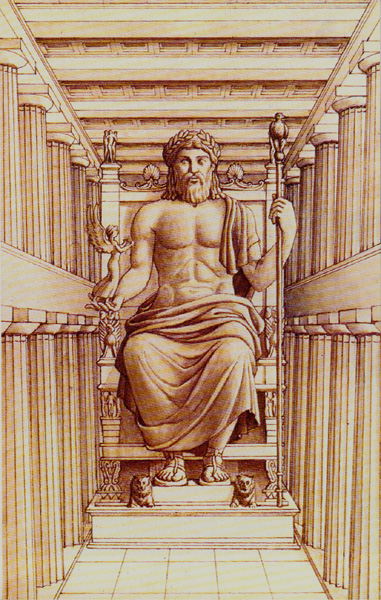
Zeus the some-mighty


An attention-grabber in the Star today, buried deep within the A section:

Modern pagans pay homage to Zeus

ATHENS–A clutch of modern pagans honoured Zeus at a 1,800-year-old temple in the heart of Athens yesterday, in the first known ceremony of its kind held there since the ancient Greek religion was outlawed by the Roman empire in the late 4th century.

Watched by curious onlookers, some 20 worshippers gathered next to the ruins of the temple for a celebration organized by Ellinais, a year-old Athens-based group that is campaigning to revive old religious practices from the era when Greece was a fount of education and philosophy.

The group ignored a ban by the culture ministry, which declared the site off limits to any kind of organized activity to protect the monument. But participants did not try to enter the temple itself, which is closed to everyone, and no officials sought to stop the ritual.

Dressed in ancient costumes, worshippers standing near the temple's imposing Corinthian columns recited hymns calling on the Olympian Zeus, "King of the gods and the mover of things," to bring peace to the world.

"Mover of things"? You'd think, given all the trouble they'd gone to to worship Zeus, they would come up with some powers not shared with, say, a three-year-old. It gets worse:

Our message is world peace and an ecological way of life in which everyone has the right to education," said Kostas Stathopoulos, one of three "high priests" overseeing the event, which celebrated the nuptials of Zeus and Hera, the goddess of love and marriage.
There you go: world peace, the ecology, and the right to an education. Personally, I'm waiting for Zeus' thoughts on eliminating third-world debt and the many uses for hemp.

After all this time, would a little awe have been too much to ask for?

Friday, January 19, 2007

The art of woohoo

Popmatters has a "A field guide to unscripted exclamations in the pop-music wilderness,"wherein they attempt to itemize the hoots, hollers, and screams that have become standard in le musique pop. It ain't the most intensive piece of music scholarship around, but even still, the absence of Screamin' Jay Hawkins seems willfully perverse.

My own favourite exclamation was always the ironic-sounding "wooo!" Neil Young gives his own one-note solo on the recorded version of "Cinammon Girl". Lately, however, it's been both the opening "Oiiiii!" and the recurring "a-heh heh heh" from Dizzee Rascal's "Fix Up Look Sharp".

Thursday, January 18, 2007

Thinking outside the camp

A potentially grim new business book: Project Lessons from the Great Escape (Stalag Luft III)
While you might think your project plan is perfect, would you bet your life on it? In World War II, a group of 220 captured airmen did just that -- they staked the lives of everyone in the camp on the success of a project to secretly build a series of tunnels out of a prison camp their captors thought was escape proof. The prisoners formally structured their work as a project, using the project organization techniques of the day. This book analyzes their efforts using modern project management methods and the nine knowledge areas of the Guide to the Project Management Body of Knowledge (PMBOK). Learn from the successes and mistakes of a project where people really put their lives on the line.
Another (actual) title in the series: Avoiding Project Disaster: Titanic Lessons for IT Executives.

Coming soon:
  • For Every Problem there is a Final Solution: Lessons from the Holocaust
  • Sell 'Em All (And Let Accounting Sort 'Em Out): Lessons from the My Lai Massacre
  • Higher Ground: Lessons from the Tsunami.

Wednesday, January 17, 2007

Quill & Quire steps boldly into the late 20th century

Quill & Quire, the august book-trade magazine that pays my rent and puts food in my children's stomachs, has just completely overhauled its daily blog, known as Quillblog. It looks nice, it's easy to read and move around in, and, speaking as one of the thing's regular contributors, it's about a thousand times better and easier to use than the old gas-powered version.

Tuesday, January 16, 2007

The grim task of the headline writer

It's likely that the editors who give newspaper photos headlines don't often stop to think about their job. Probably things move too quickly for introspection. But then, every once in a while, they must find themselves with the grim task of giving a hed to a shot of a bear frolicking. My guess is that, at those times, an editor will sit for a long time, thinking back over the many things he wanted to do but didn't, wanted to accomplish but couldn't. After a few minutes of that, he takes a deep breath, types in some variation on "Grin and Bear It," then puts his computer to sleep and goes looking for booze.

Today, I feel for that sad man (or woman) at the Star who had to do this (from today's front page):

Blues, tears, and sorrow

Funky 16 Corners, unearthers of the finest soul, funk, and r&b on 45, has a new downloadable mix up entitled "Blues, tears, and sorrow." Go get it before it disappears. This is apparently the eighteenth such mix he's made available. I've only caught the last three or four, but this new one's my favourite thusfar. I am a sucker for soultown melodrama, and tend to prefer the slow burn to the firecracker.

On the other hand, the Chess Northern Soul compilation is one I've been sticking to like glue lately, and that stuff don't burn slow.

Sunday, January 14, 2007

Fuck compassion

James Grainger, in a review of Colum McCann's Zoli in the Toronto Star, makes a point about compassion in literary fiction that should be forcibly tattooed on the forehead of every book critic and reviewer in Canada:
This narrative strategy is employed by many contemporary novelists and is quite simple: Find a tragic period in recent history (World War II, the Stalinist purges); gather up the right period details and then drop in a sympathetic protagonist. The result: instant pathos and a good chance at making an award shortlist or two.

By creating protagonists whose struggles to maintain personal dignity in the face of war, poverty and persecution are so patently tragic that only a sociopath could fail to shed a tear, these authors are inevitably labelled "brave," "humane" and, of course, "compassionate."

Why is this so hard to understand? Why are we repeatedly asked to admire writers for bringing us the shocking news that war is bad, or that bad things happen to good people? It's always frustrating to see ostensibly sophisticated readers and writers allowing themselves to be repeatedly taken in by the literary equivalent of a Ron Howard movie.


(The flipside of this, something I am depressingly familiar with, is the complaint that a given work of fiction "lacks sympathetic characters." About that, I've been planning to write something longer for a while now – a "defence of unlikeable characters.")

Best book title of 2006

Hands down, it's: Ptarmageddon by Karen Dudley.

(This book, it should be noted, is the fourth in a series that also includes Hoot to Kill, Red Heron, and Macaws of Death.)

Thursday, January 11, 2007

Jack Layton's Blurbgate

Steve Janke of the Blogging Tories has gone trawling for scandal and come up with a boot:
Jack Layton and the NDP advertise Jack Layton's books on the party website. That's fine, except that the review excerpt is misleadingly quoted out of context. Instead of praise for the entire book by a major newspaper, the reality is that one columnist praised the first chapter only.

It's all very tawdry, really.

It sure is, if your definition of "tawdry" is "standard industry practice." As one of Janke's own commenters points out, review blurbs almost never cite the actual reviewer. As for a blurb being taken slightly out of context, well, what exactly does he think a blurb is? There's a reason you rarely see entire reviews reprinted on book jackets, movie posters, or CD cases.

Wednesday, January 10, 2007

Working for the Yankee dollar

So Shaun Majumder will play a terrorist on 24. (Story here.) He says the role will give "people who only see me in a comedic light a surprise that I can do drama."

I suppose that when this is your day job –
On This Hour Has 22 Minutes, Majumder plays the somewhat damp Hindu reporter Raj Binder, as well as a clueless news anchor.
– the chance to portray stereotypes for real money must be pretty hard to turn down.

Monday, January 08, 2007

Writers who like writers

I spent the weekend lying on the couch, coughing and shivering (thanks again to the philthy and germ-ridden kids at my daughter's daycare), but through the miracle of delayed publication, a review I wrote in September of The Company They Kept: Writers on Unforgettable Friendships appeared in Sunday's Star. Read it here.

Thursday, January 04, 2007

Agentese

Having worked for a couple of years in a literary agent's office, this gives me a warm feeling of nostalgia (or perhaps that's just my mouth filling with blood).

Actually, that entire site is filled with things that got said pretty much every day, as the mail got opened. The most important thing a writer needs is a clue. Know when to hold 'em, know when to fold 'em.

Oh, and know that the best way to get your foot in an agent's attention is to work for one for a while. (Crosses self, says a prayer of thanks, knocks on wood, throws salt over shoulder...)

Speaking of advice, I came across this, Elmore Leonard's rules for good writing. Most of them are the standard, "don't be one of them lit'rary types, and no showin' off" kind of thing. The same kind of thing (and in a couple of cases, the exact same advice) that Stephen King gives here and in On Writing. On the other hand, I really liked Leonard's quoting one of his own characters, a writer of historical romances who says she writes books full of "rape and adverbs."

I immediately thought that we do that kind of thing a little differently in Canada: most of our earnest, middlebrow, "major" novelists keep the adverbs but lose the rape.

Wednesday, January 03, 2007

An eye for an eye, a noose for a noose

From today's Globe and Mail:
Baghdad — The person believed to have recorded Saddam Hussein's raucous execution on a cell phone camera was arrested Wednesday, an adviser to Iraq's prime minister said.
If found guilty, the man will be pulled apart by wild horses. His lawyer will only be smeared with honey and tied to an anthill. (And the whole thing will be on YouTube within hours.)

I like that Hussein's execution is described as "raucous." Maybe my experience is atypical, but I've managed to attend quite a few "raucous" gatherings where no one was hung by the neck.

Tuesday, January 02, 2007

Answering rhetorical questions

from Macleans:
Is [George Stroumboulopoulos] just the latest point on the CBC hipster-doofus continuum – Daniel Richler, Avi Lewis, Evan Solomon, Jian Ghomeshi – or The One?
The first one.

Lord, please take him to the bridge

Look what happens when the hardest working man in showbusiness takes a day off.

Larry over at Funky16Corners has been eulogizing James Brown like mad for the past week. His essay on JB's birthing of modern funk is a good one, despite the dubious, cranky-old-man shots at JB's musical descendants. (Prince borrowed a lot from Brown, but to say that he is wholly Brown-derivative is just bullshit.)

I especially like the section on "There Was a Time," a song that is probably the perfect demonstration of Brown's polyrythmic approach to funk, where no single instrument carries the groove. You can also draw a straight line from that song to Fela Kuti, someone who stole a hell of a lot more from Brown than Prince, and who made just as much brilliant and original music with what he took.

[Update: How not to write about Brown (from ZNet):
James Brown was spot-on in voicing black people's demand for more fairness and justice in U.S. employment. He nailed the alienated, exploited and oppressed lot of wage-labor for African Americans.

Moreover, his freedom lyrics for them had to, and I say did in fact, appeal to others for whom the workplace by its very structure of inequality creates un-human conditions. Therefore, I think we overlook to our loss the revolutionary attraction of Brown's lyrics to society's mass, the laboring class, employed and unemployed. The black struggle was/is a race, class and gender struggle for a new society.

Not that any of this is wrong, but don't write about the guy like he's frigging Pete Seeger. The revolutionary aspect of Brown's music was in performance, not mere lyrical content. It's an extension of gospel music – the words sung are secondary (something Brown himself both parodied and affirmed in The Blues Brothers). Even "Say it Loud (I'm Black and I'm Proud)" gets most of its power from the intensity of Brown's exhortation, not the mere fact of it's title/chorus.]

    A very subtle and funny writer - one I've become obsessed with over the past year - in a decidedly Muriel Spark mood. Imagine The Pr...