Monday, January 22, 2007

"Just because I'm paranoid doesn't mean Margaret Atwood isn't out to get me."

Stephen Henighan goes off the map to where the paranoia-dragons live in this Geist column on Vincent Lam's Giller win.

If the teaser deck ("In an instant, Vincent Lam became a member of the Family Compact") weren't enough, Henighan comes right out of the gate with a statement so baldly wrong it manages to demonstrate exactly the point at which exaggeration for rhetorical effect can lift one's point free of all truthful mooring:
The Giller Prize is the most conspicuous example of corporate suffocation of the public institutions that built our literary culture.
Whoa now, you might say, I know the Gillers can be pretty ridiculous and have only a tenuous connection to the creation and appreciation of actual literature, but the most conspicuous suffocator of our literary culture? The Gillers? Exactly how does a high-profile book award – one whose Max Fischer-like desire to be both popular and respected has resulted in an annual ceremony that manages to be both a low-camp, celebrity-obsessed self parody and a stiff parade of humourless bourgeois irrelevancy – exactly how does something like that kill off a culture?

Well, Henighan says, the problem is that the Gillers have consistently favoured books published by the various Random House imprints. Fair enough and true enough. But then, having made a valid point, Henighan can't resist ruining it with a bit of geographic paranoia:
From 1994 to 2004, all the Giller winners, with the exception of Mordecai Richler, lived within a two-hour drive of the corner of Yonge and Bloor.
Yonge and Bloor? Has Henighan actually ever been to Yonge and Bloor? It may astonish Henighan to know that a healthy percentage of the Canadian population lives within two hours' drive of Yonge and Bloor, a percentage that includes... the Guelph-dwelling Stephen Henighan! Note, too, that with this generous "two-hour drive" allowance, he manages to shoehorn in Richard W. Wright, who lives in St. Catherines, and Alice Munro, who lives (I think) in Clinton, Ontario.

(Sort of makes you wonder why Ben Kerr never managed to snag the mayorship, given his virtual residence at Canada's cultural ground zero.)

He goes on:
The 2005 Giller Prize was won by David Bergen, a skilful writer who conformed to type in that his winning novel, The Time In Between, was published by M&S and took place in an exotic foreign locale (Vietnam). Bergen’s earlier—and, in my view, stronger—novels, such as The Case of Lena S., were set in and around Winnipeg, where, to the horror of the Toronto media, the author still lived. “Winnipeg Schoolteacher Wins Giller Prize” read the baffled Globe and Mail headline announcing Bergen’s victory. This outrageous breach of etiquette was compounded by the fact that Bergen, a very tall Mennonite who looked like a serious fellow in photographs, did not fit the teddy bear image—think W. O. Mitchell, think Farley Mowat, think Timothy Findley, even think Richler in his final, mellower years—expected of male Canadian writers with a wide readership.
What exactly is Henighan arguing here? Follow the thread: Bergen wins with the kind of novel the Giller juries typically go for, and with a big, Random House-associated publisher, also a Giller preference. And it wasn't for Bergen's strongest novel. Again, all fair and true enough. Big prizes are poor arbiters of taste or artistic quality. (Hope you were sitting down when you read that last sentence.) So, according to Henighan, Bergen's win was not entirely deserved. But wait: having anointed Bergen, our Yonge-and-Bloor-dwelling cultural elite then shunned him for the heinous crime of living in Winnipeg and being tall and thin, and not a jolly teddy bear like, um, Mordecai Richler. What links Mitchell, Mowat, Findley, and Richler – a paunch? Has Henighan met a male over 40 with a sedentary career? Is that the central qualification for literary lionization in this country – a spare tire? Middle-aged spread?

Henighan can't quite make up his mind whether, in the case of Bergen's win, the fix was in or the little guy pulled off a rare victory. He does the same with M.G. Vassanji, painting him as both an insider and an outsider within the space of about three paragraphs.

And so he goes on to the 2006 win for Vincent Lam – who, as far as I can tell, keeps fairly fit. (I'm sure a wise editor has told him to lay off the sit-ups – he's a bestselling male author now!)

Read, amazed, as Henighan lays out the conspiracy in detail:
I should have paid more attention to the significance of Alice Munro and Margaret Atwood withdrawing their 2006 titles from consideration for the Giller. This canny strategy enabled the old guard to become kingmakers.... As soon as Atwood stood up to introduce the fifth shortlisted author, Vincent Lam, anyone who understood power in Canadian culture knew that Lam had won. Margaret Atwood does not introduce losers. By placing her authority behind Lam, she was giving the equivalent of el dedazo, the crook of the finger with which a Mexican president signals his successor.
El dedazo! He fails to add that, shortly before the ceremony, the other nominees were handed the black spot. Here's where Henighan really gets into it, abandoning his obsession with Yonge and Bloor for a non-sequitur so bizarre and breathtakingly offensive I can only wonder how his pharmacist keeps his licence:
In an instant Vincent Lam, in contrast to previous “multicultural” Giller winners Vassanji, Rohinton Mistry and Austin Clarke—all of them relative loners, none of them born or raised in Canada, none of them able to boast an exemplary interracial marriage such as that between Lam and his Anglo-Greek-descended wife—became a member of the Family Compact and a potential teddy bear.
And there you have it. Lam, though Asian, and therefore multicultural, is not a loner, and has married outside his race, making him perfect for induction into the CanLit version of the Masons and the Illuminati. You can almost imagine Henighan saying all this in a heavy baritone on some after-midnight radio show way at the far end of the AM dial.

Now to be fair, there is more than enough to criticize about the Gillers, both in general and specifically with Lam's win. (Go here for some of that.) But what Henighan has done here is effectively discredit all criticism that shares any of his more valid points while stopping short of demanding that the RICO Act be enforced. The Gillers are a rotten borough, no question, but again, no big cultural award possesses integrity and venality in proportions that favour the former. Henighan's column displays so little perspective it may as well have been presented in cartoon form. To be honest, I hope every person he goes after in the thing comes away feeling just a little flattered to have been mistaken, if only fleetingly, for someone who wields genuine power.


[UPDATE: for photographic proof of the Giller conspiracy, click here and scroll down.]

Monday off-site blogging

Two posts of mine over at Quillblog: one about a nutty column by A.L. Wilson on Ian McEwan's long-lost brother, and one about the new head of Bertelsmann.

The Bertelsmann one is a snore, so skip it unless corporate transfers of power are your thing. The Wilson column is pretty funny, however.

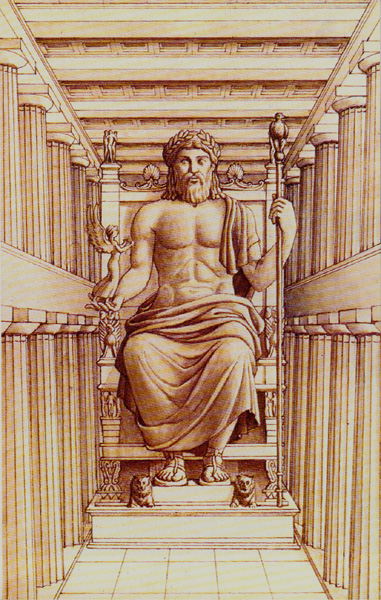
Zeus the some-mighty


An attention-grabber in the Star today, buried deep within the A section:

Modern pagans pay homage to Zeus

ATHENS–A clutch of modern pagans honoured Zeus at a 1,800-year-old temple in the heart of Athens yesterday, in the first known ceremony of its kind held there since the ancient Greek religion was outlawed by the Roman empire in the late 4th century.

Watched by curious onlookers, some 20 worshippers gathered next to the ruins of the temple for a celebration organized by Ellinais, a year-old Athens-based group that is campaigning to revive old religious practices from the era when Greece was a fount of education and philosophy.

The group ignored a ban by the culture ministry, which declared the site off limits to any kind of organized activity to protect the monument. But participants did not try to enter the temple itself, which is closed to everyone, and no officials sought to stop the ritual.

Dressed in ancient costumes, worshippers standing near the temple's imposing Corinthian columns recited hymns calling on the Olympian Zeus, "King of the gods and the mover of things," to bring peace to the world.

"Mover of things"? You'd think, given all the trouble they'd gone to to worship Zeus, they would come up with some powers not shared with, say, a three-year-old. It gets worse:

Our message is world peace and an ecological way of life in which everyone has the right to education," said Kostas Stathopoulos, one of three "high priests" overseeing the event, which celebrated the nuptials of Zeus and Hera, the goddess of love and marriage.
There you go: world peace, the ecology, and the right to an education. Personally, I'm waiting for Zeus' thoughts on eliminating third-world debt and the many uses for hemp.

After all this time, would a little awe have been too much to ask for?

Friday, January 19, 2007

The art of woohoo

Popmatters has a "A field guide to unscripted exclamations in the pop-music wilderness,"wherein they attempt to itemize the hoots, hollers, and screams that have become standard in le musique pop. It ain't the most intensive piece of music scholarship around, but even still, the absence of Screamin' Jay Hawkins seems willfully perverse.

My own favourite exclamation was always the ironic-sounding "wooo!" Neil Young gives his own one-note solo on the recorded version of "Cinammon Girl". Lately, however, it's been both the opening "Oiiiii!" and the recurring "a-heh heh heh" from Dizzee Rascal's "Fix Up Look Sharp".

Thursday, January 18, 2007

Thinking outside the camp

A potentially grim new business book: Project Lessons from the Great Escape (Stalag Luft III)
While you might think your project plan is perfect, would you bet your life on it? In World War II, a group of 220 captured airmen did just that -- they staked the lives of everyone in the camp on the success of a project to secretly build a series of tunnels out of a prison camp their captors thought was escape proof. The prisoners formally structured their work as a project, using the project organization techniques of the day. This book analyzes their efforts using modern project management methods and the nine knowledge areas of the Guide to the Project Management Body of Knowledge (PMBOK). Learn from the successes and mistakes of a project where people really put their lives on the line.
Another (actual) title in the series: Avoiding Project Disaster: Titanic Lessons for IT Executives.

Coming soon:
  • For Every Problem there is a Final Solution: Lessons from the Holocaust
  • Sell 'Em All (And Let Accounting Sort 'Em Out): Lessons from the My Lai Massacre
  • Higher Ground: Lessons from the Tsunami.

Wednesday, January 17, 2007

Quill & Quire steps boldly into the late 20th century

Quill & Quire, the august book-trade magazine that pays my rent and puts food in my children's stomachs, has just completely overhauled its daily blog, known as Quillblog. It looks nice, it's easy to read and move around in, and, speaking as one of the thing's regular contributors, it's about a thousand times better and easier to use than the old gas-powered version.

Tuesday, January 16, 2007

The grim task of the headline writer

It's likely that the editors who give newspaper photos headlines don't often stop to think about their job. Probably things move too quickly for introspection. But then, every once in a while, they must find themselves with the grim task of giving a hed to a shot of a bear frolicking. My guess is that, at those times, an editor will sit for a long time, thinking back over the many things he wanted to do but didn't, wanted to accomplish but couldn't. After a few minutes of that, he takes a deep breath, types in some variation on "Grin and Bear It," then puts his computer to sleep and goes looking for booze.

Today, I feel for that sad man (or woman) at the Star who had to do this (from today's front page):

Blues, tears, and sorrow

Funky 16 Corners, unearthers of the finest soul, funk, and r&b on 45, has a new downloadable mix up entitled "Blues, tears, and sorrow." Go get it before it disappears. This is apparently the eighteenth such mix he's made available. I've only caught the last three or four, but this new one's my favourite thusfar. I am a sucker for soultown melodrama, and tend to prefer the slow burn to the firecracker.

On the other hand, the Chess Northern Soul compilation is one I've been sticking to like glue lately, and that stuff don't burn slow.

Sunday, January 14, 2007

Fuck compassion

James Grainger, in a review of Colum McCann's Zoli in the Toronto Star, makes a point about compassion in literary fiction that should be forcibly tattooed on the forehead of every book critic and reviewer in Canada:
This narrative strategy is employed by many contemporary novelists and is quite simple: Find a tragic period in recent history (World War II, the Stalinist purges); gather up the right period details and then drop in a sympathetic protagonist. The result: instant pathos and a good chance at making an award shortlist or two.

By creating protagonists whose struggles to maintain personal dignity in the face of war, poverty and persecution are so patently tragic that only a sociopath could fail to shed a tear, these authors are inevitably labelled "brave," "humane" and, of course, "compassionate."

Why is this so hard to understand? Why are we repeatedly asked to admire writers for bringing us the shocking news that war is bad, or that bad things happen to good people? It's always frustrating to see ostensibly sophisticated readers and writers allowing themselves to be repeatedly taken in by the literary equivalent of a Ron Howard movie.


(The flipside of this, something I am depressingly familiar with, is the complaint that a given work of fiction "lacks sympathetic characters." About that, I've been planning to write something longer for a while now – a "defence of unlikeable characters.")

Best book title of 2006

Hands down, it's: Ptarmageddon by Karen Dudley.

(This book, it should be noted, is the fourth in a series that also includes Hoot to Kill, Red Heron, and Macaws of Death.)

Thursday, January 11, 2007

Jack Layton's Blurbgate

Steve Janke of the Blogging Tories has gone trawling for scandal and come up with a boot:
Jack Layton and the NDP advertise Jack Layton's books on the party website. That's fine, except that the review excerpt is misleadingly quoted out of context. Instead of praise for the entire book by a major newspaper, the reality is that one columnist praised the first chapter only.

It's all very tawdry, really.

It sure is, if your definition of "tawdry" is "standard industry practice." As one of Janke's own commenters points out, review blurbs almost never cite the actual reviewer. As for a blurb being taken slightly out of context, well, what exactly does he think a blurb is? There's a reason you rarely see entire reviews reprinted on book jackets, movie posters, or CD cases.

Wednesday, January 10, 2007

Working for the Yankee dollar

So Shaun Majumder will play a terrorist on 24. (Story here.) He says the role will give "people who only see me in a comedic light a surprise that I can do drama."

I suppose that when this is your day job –
On This Hour Has 22 Minutes, Majumder plays the somewhat damp Hindu reporter Raj Binder, as well as a clueless news anchor.
– the chance to portray stereotypes for real money must be pretty hard to turn down.

Monday, January 08, 2007

Writers who like writers

I spent the weekend lying on the couch, coughing and shivering (thanks again to the philthy and germ-ridden kids at my daughter's daycare), but through the miracle of delayed publication, a review I wrote in September of The Company They Kept: Writers on Unforgettable Friendships appeared in Sunday's Star. Read it here.

Thursday, January 04, 2007

Agentese

Having worked for a couple of years in a literary agent's office, this gives me a warm feeling of nostalgia (or perhaps that's just my mouth filling with blood).

Actually, that entire site is filled with things that got said pretty much every day, as the mail got opened. The most important thing a writer needs is a clue. Know when to hold 'em, know when to fold 'em.

Oh, and know that the best way to get your foot in an agent's attention is to work for one for a while. (Crosses self, says a prayer of thanks, knocks on wood, throws salt over shoulder...)

Speaking of advice, I came across this, Elmore Leonard's rules for good writing. Most of them are the standard, "don't be one of them lit'rary types, and no showin' off" kind of thing. The same kind of thing (and in a couple of cases, the exact same advice) that Stephen King gives here and in On Writing. On the other hand, I really liked Leonard's quoting one of his own characters, a writer of historical romances who says she writes books full of "rape and adverbs."

I immediately thought that we do that kind of thing a little differently in Canada: most of our earnest, middlebrow, "major" novelists keep the adverbs but lose the rape.

Wednesday, January 03, 2007

An eye for an eye, a noose for a noose

From today's Globe and Mail:
Baghdad — The person believed to have recorded Saddam Hussein's raucous execution on a cell phone camera was arrested Wednesday, an adviser to Iraq's prime minister said.
If found guilty, the man will be pulled apart by wild horses. His lawyer will only be smeared with honey and tied to an anthill. (And the whole thing will be on YouTube within hours.)

I like that Hussein's execution is described as "raucous." Maybe my experience is atypical, but I've managed to attend quite a few "raucous" gatherings where no one was hung by the neck.

Tuesday, January 02, 2007

Answering rhetorical questions

from Macleans:
Is [George Stroumboulopoulos] just the latest point on the CBC hipster-doofus continuum – Daniel Richler, Avi Lewis, Evan Solomon, Jian Ghomeshi – or The One?
The first one.

Lord, please take him to the bridge

Look what happens when the hardest working man in showbusiness takes a day off.

Larry over at Funky16Corners has been eulogizing James Brown like mad for the past week. His essay on JB's birthing of modern funk is a good one, despite the dubious, cranky-old-man shots at JB's musical descendants. (Prince borrowed a lot from Brown, but to say that he is wholly Brown-derivative is just bullshit.)

I especially like the section on "There Was a Time," a song that is probably the perfect demonstration of Brown's polyrythmic approach to funk, where no single instrument carries the groove. You can also draw a straight line from that song to Fela Kuti, someone who stole a hell of a lot more from Brown than Prince, and who made just as much brilliant and original music with what he took.

[Update: How not to write about Brown (from ZNet):
James Brown was spot-on in voicing black people's demand for more fairness and justice in U.S. employment. He nailed the alienated, exploited and oppressed lot of wage-labor for African Americans.

Moreover, his freedom lyrics for them had to, and I say did in fact, appeal to others for whom the workplace by its very structure of inequality creates un-human conditions. Therefore, I think we overlook to our loss the revolutionary attraction of Brown's lyrics to society's mass, the laboring class, employed and unemployed. The black struggle was/is a race, class and gender struggle for a new society.

Not that any of this is wrong, but don't write about the guy like he's frigging Pete Seeger. The revolutionary aspect of Brown's music was in performance, not mere lyrical content. It's an extension of gospel music – the words sung are secondary (something Brown himself both parodied and affirmed in The Blues Brothers). Even "Say it Loud (I'm Black and I'm Proud)" gets most of its power from the intensity of Brown's exhortation, not the mere fact of it's title/chorus.]

Saturday, December 30, 2006

Saddam executed by Mexican wrestlers


Or maybe he was the victim of a house invasion. Personally, I think it would have been more effective – not to mention more historically and symbolically apt – for his executioners to have worn masks depicting former U.S. presidents, the way bank robbers sometimes do.

The big story in all this is how, immediately after the execution, millions of Iraqis tortured, gassed, and assassinated under Saddam's brutal rule magically came back to life, and peace and prosperity instantly came to that troubled country.

Of course, there are always a few grumblers who think hanging the man won't change jackshit.

Irony, which keeps refusing to die, also found itself on the gallows yesterday. From the Toronto Star:
Saddam remained in U.S. custody until he was turned over, at the very last, to the Iraqis.

Al-Nueimi said yesterday U.S. authorities were maintaining physical custody of Saddam to prevent him from being humiliated before his execution, and because the Americans also want to prevent the mutilation of his corpse, as has happened to other deposed Iraqi leaders.

"The Americans want him to be hanged respectfully," said al-Nueimi, noting any ill-treatment of his corpse "could cause an uprising, and the Americans would be blamed."

Those poor Americans can't catch a break, can they? I especially like their sudden concern for optics when it comes to humiliation and torture.


[UPDATE: check out this video retrospective on Saddam's "special" relationship with the U.S.]

[UPDATE II: also, please read this post from Glenn Greenwald on the illegality of Saddam's execution.]

Friday, December 29, 2006

Back in town

Back in Toronto after a few very cold days in the countryside outside of Ottawa with family. A highlight of the week was the lighting (not by me) of an outside fire with the help of a jug of chainsaw oil, a spray can of some other kind of highly combustible lubricant (the flame moving very quickly up the stream of oil to ignite the glove holding the can), and, finally, a small cup of gasoline (which went up with a very satisfying whoof!).

Anyway, it looks like I picked the right week to be away from the city:

While most people are uncomfortably hugging their relatives and McDonald's employees are still rolling their eyes when you ask for a free smile, six UBC students/Torontonians were out at Yonge and Dundas yesterday voluntarily hugging people.

[...]

Huggers have been spotted in the downtown core prior to yesterday, but the "Hug Master" of this current escapade is known as Matthew Corker. He started last week around Vancouver and is on his way to bust out the hugs in New York next week. Now what's special about this wonderful and loving homosapien is that he told us something a little hurtful. Honest, but still hurtful. He said that upon his travels and comparatively speaking: Vancouver was more open to the free hugs than Toronto. Yeah, that's what he said.

(from Torontoist.com)


You know, I was looking forward to maybe reading this book if I got the chance, but now I feel as though I need to – just to get the bad taste out of my mouth at the thought of a bunch of clean-cut, super-enthusiastic Vancouverites handing out free hugs.

Friday, December 22, 2006

Covered

There are two ways to go about covering someone else's song.

Option 1) pick something totally inappropriate, siphon all the life out of it, then stand there awkwardly as it hits the floor:


(Here's the original. Mandy's version doesn't even have any guilty pleasure value. She would have been a lot better off doing this one instead.)


Option 2) Just fucking steal everything you need from the original – and its video, too, if need be:


(Result? Geniusness. Golimar!)

This has been a little Christmas present to all who waste their time on this blog.

Wednesday, December 20, 2006

Regan's packing up, moving out

Here's what's on page 2 and 3 of the Regan Books Winter 2007 catalogue:


Sort of takes on a slightly different context now, doesn't it?


(thanks to Gary for the scan)

(And thanks to Bookninja and Galley Cat for the links.)

(... and fishbowl NY.)

Tuesday, December 19, 2006

Goin' down the road

from CBC.ca:

A murder victim found north of Toronto in 1968 was identified by police on Tuesday as Richard (Dickie) Hovey of New Brunswick.

Ontario Provincial Police made the breakthrough in the nearly 40-year-old case after publicizing a facial reconstruction of the victim and offering a $50,000 reward for information leading to the killer.

[...]

Hovey moved to Toronto from Fredericton in 1966 or 1967 and was working as a musician in the city's Yorkville area, then a counterculture haven, police said.

Investigators say Hovey disappeared in the late spring or early summer of '67, and believe he was 17 at the time of his death.


One question remains: who will be the first to turn this story into a novel? If a mystery writer gets to it first, the result will be a 275-page book full of corny dialogue and undigested research into the era, and with little psychological insight into the Hovey character, but with a storyline that is packed with incident and is expertly paced. If a more literary writer gets to it, the result will be a 450-page book full of corny dialogue and undigested research into the era, and with a storyline that crawls along on its belly, fattened on metaphor and symbol and aphoristic filigree, but starved of incident. In his psychological makeup, the Hovey character will be a near-exact match for the author's own idealized self.

That's my prediction, anyway.

Off-site blogging

I was at home with sick chilluns yesterday, but, thanks to the miracle of technology, was still able to fulfill my blogging quota over at Quill & Quire. They be: A) Finn Harvor's new publishing blog; and B) the few tears shed over Judith Regan's ouster.

Sunday, December 17, 2006

The Orange Menace

The RCMP spied on Tommy Douglas for years.

Well, after the election of Stephane Dion as Liberal leader and the Green Party surge, the NDP needed some good news. This gives them some street cred for a couple of weeks. Across Canada, thousands of Volvo socialists have rediscovered a sense of purpose: "You see? The Man's always been afraid of us...."

Saturday, December 16, 2006

Makes no sense at all

Two things I never thought I'd see together: Joan Rivers and HĂ¼sker DĂ¼.


It's all very surreal (even more so than the Warehouse-esque set they're playing on), but my favourite moment is when, going to commercial after the interview, Rivers says "We'll be right back in a few minutes with the 85-year-old marathon winner and actor Ian McKellan," and the studio band starts into "Got To Get You Into My Life" by The Beatles. Plus, they let HĂ¼sker DĂ¼ do a second song to play out the show! It's like a scene from some alternate universe where HĂ¼sker DĂ¼ broke big, Nirvana-style, instead of breaking up.

(And what the hell was Ian McKellan promoting that night? This was 1987, which, according to McKellan's own website, he spent performing a solo show called "Acting Shakespeare." More proof that this is from an alternate universe – one I would kill to live in.)

Thursday, December 14, 2006

Even Easy Street has a pothole or two

For someone who was once sent scurrying after a failed attempt to buy "two pounds of fresh, ripe tomatoes," Jacob Richler sure has done well for himself, food-wise. He is the National Post's food columnist, where he acts as a kind of "snob at large," trying this, sampling that, and basically pooh-poohing anything that doesn't come in a tiny, glass jar, costs less than $40 a gram, and hasn't been harvested from the uterus of an endangered creature. The columns would be pretty dull fare (get it?), but for the glimpses they give into Richler's life and his particular perspective on the world around him.

For example, see this week's column, on cheese.
I moved last week, and it was an unequivocally joyous event marred only by the predictable chaos that inevitably follows from this sort of thing – especially in the fridge. General disorganization meant that I actually ordered in dinner one night. [emphasis mine]
Horrors! But it gets worse for young Jacob...
One night, finding nothing in the fridge that appealed, I was driven to rummaging around in the cupboard, where the best thing I could find was a tin of duck confit from vallee du Lagoin, France. And while the legs did turn out very well indeed once crisped, and the extra fat lent itself nicely to a pommes sarladaises, afterward, the unthinkable happened: I had run out of cheese.
I think we can all identify with that: laundry comes back unpressed, the nanny's late, the episode of Brideshead Revisited they're showing on PBS is the same one they showed last week, and then this – nothing in the house but some imported confit. Not a crumb of cheese. Well, maybe a crumb. Actually, more like about $50 worth of high-end fromage:
OK, there was a small amount of a nice tete de moine, a small wedge of special reserve Stilton from Thomas Hoe Stevenson, and half a wheel of fine raw milk Camembert from Isigny Ste-Mere, but there wasn't much cheese. Certainly there was nothing new and exciting or previously unsampled – I had not been to the Cheese Boutique for weeks, and there was no prospect of finding the time to do so over the following few days.

How very grim.
Grim, indeed, but Richler should at least be thankful that, for all his cheese-related hardships, he is not as bad off as those students at his local Dominion he talks about earlier in the column, the ones “splitting the charge for a box of KD and a four-pack of toilet paper eight ways.”

Actually, I wish Jacob, in the spirit of the holidays, had chosen to momentarily overlook the social and cultural gulf separating him from those students and invited them back to his place for a big, communal meal of macaroni and tete de moine.

Another guy dies, another guy gets well.

Peter Boyle, RIP.

Boyle's greatest moment, set as poetry:
Look at it this way.
A man takes a job, you know?
And that job – I mean, like that –
That becomes what he is.
You know, like –
You do a thing and that's what you are.
Like I've been a cabbie for years. Ten years at night.
I still don't own my own cab. You know why?
Because I don't want to. That must be what I want.
To be on the night shift drivin' somebody else's cab.
You understand?
I mean, you become – You get a job, you become the job.
One guy lives in Brooklyn. One guy lives in Sutton Place.
You got a lawyer. Another guy's a doctor.
Another guy dies. Another guy gets well.
People are born.
I envy you your youth.
Go on, get laid, get drunk. Do anything.
You got no choice, anyway. I mean, we're all fucked.
More or less, ya know.

Tuesday, December 12, 2006

Gwyn goes double-negative on Iraq

The Toronto Star's Richard Gwyn has some words for those who would formulate such a simplistic equation as Iraq=Vietnam:
It's certainly not true that the fact that no dominoes fell after North Vietnam's victory means that it can be assumed automatically that nothing much will happen after a U.S. pullout from Iraq.
"The situation in Iraq is as complicated as my sentence construction," Gwyn seems to be saying. Or rather, doesn't seem to be not saying.

Monday, December 11, 2006

Hitchens not being funny

Christopher Hitchens has a new thing in Vanity Fair on why women aren’t funny. Seriously – that’s the topic.

Read it here. Below is my abbreviated version, with comments:

Be your gender what it may, you will certainly have heard the following from a female friend who is enumerating the charms of a new (male) squeeze: "He's really quite cute, and he's kind to my friends, and he knows all kinds of stuff, and he's so funny … " (If you yourself are a guy, and you know the man in question, you will often have said to yourself, "Funny? He wouldn't know a joke if it came served on a bed of lettuce with sauce bĂ©arnaise.")
Zing! Snap! Seriously, if you’re trying to prove that men are funnier than women, you really ought to lead with a joke that’s actually, you know, funny.
However, there is something that you absolutely never hear from a male friend who is hymning his latest (female) love interest: "She's a real honey, has a life of her own … [interlude for attributes that are none of your business] … and, man, does she ever make 'em laugh."

Now, why is this? Why is it the case?, I mean.

Because no one ever actually speaks like this? That’s one reason that jumps out at me right away.

Why are women, who have the whole male world at their mercy, not funny? Please do not pretend not to know what I am talking about.

I’m sorry: I have no idea what you are talking about, and I’m really not pretending. I don’t want to play the “some of my best friends are X” card here, but I really do know a whole lot of funny ladies. And you know what else? Funny ladies turn my crank.

All right—try it the other way (as the bishop said to the barmaid).

Now you’re not even trying, Hitch…

Why are men, taken on average and as a whole, funnier than women? Well, for one thing, they had damn well better be. The chief task in life that a man has to perform is that of impressing the opposite sex, and Mother Nature (as we laughingly call her) is not so kind to men. In fact, she equips many fellows with very little armament for the struggle. An average man has just one, outside chance: he had better be able to make the lady laugh. Making them laugh has been one of the crucial preoccupations of my life. If you can stimulate her to laughter – I am talking about that real, out-loud, head-back, mouth-open-to-expose-the-full-horseshoe-of-lovely-teeth, involuntary, full, and deep-throated mirth; the kind that is accompanied by a shocked surprise and a slight (no, make that a loud) peal of delight—well, then, you have at least caused her to loosen up and to change her expression. I shall not elaborate further.

That’s right: funny guys get more ass than a toilet seat. I can certainly attest to that. Even if, as used to happen pretty much all the time, the woman I was filling with deep-throated mirth opted to mate with someone more brooding and handsome, I was always comforted in the knowledge that it was me she really wanted. I exposed her horseshoe of teeth, after all – how sexy is that?

Women have no corresponding need to appeal to men in this way. They already appeal to men, if you catch my drift.

Tee hee hee, sure do, you dirty dog! Hear you loud and clear! Tee hee hee. Rowf, rowf!

It goes on like that. Women aren’t funny unless they are lesbian, Jewish, or fat. Women aren’t funny because they’re smarter than men. Women aren’t funny because they can give birth, and there’s nothing funny about that.

The best part, for me, was when he identifies “self-deprecation” as “almost masculine by definition.” At the risk of making the kind of sweeping generalization that is the very engine of Hitch’s essay, self-deprecation has always seemed to me to come easier to women than to men, for a lot of no-so-great reasons that should be fairly obvious when you think about it. The worst, most pompous, self-important, and humourless people I have encountered have tended to be men.

It’s probably not all that surprising that someone who has lost all ability to analyze power relationships on a geopolitical level is also blind to such relationships on a man-to-woman level. I’ve never met Christopher Hitchens (though I did stand near him at a party!), but I’m guessing that most of the female laughs he does manage to get are a direct result of A) the fact that he’s famous, and people will laugh at most things famous people say if it sounds as though it's meant to be funny; B) the fact that he’s British and well educated, and can therefore phrase anything, even the tritest shit (see everything above, for example), to make it sound like wit of the first order; and C) the fact that most women Hitch would likely come into contact with are polite, and would choose not to embarrass a fat sweaty drunk by giving him the eye-roll he clearly deserves. He also doesn’t seem to understand the very basic difference between someone with a sense of humour, and someone who merely makes a lot of jokes.

And I know the trap I’m falling into here, letting myself get provoked by an article that says “Provocation” right over the title. And I’m aware of the rhetorical self-defence mechanism built right into the essay: “Didn’t find it funny? Proves my point.” Which is, sadly, exactly the line being used by the previously funny Graydon Carter, VF’s editor.


[thanks to Bookninja and Powells.com for the links]

Hugh Laurie being funny

My eight-year-old can't get enough of this:

Monday off-site blogging

Monday posts on Quill & Quire's blog: A) new 'darker, edgier' Spider-man shows Peter Parker's spider-junk ; and B) The quick turnaround on the Iraq Study Group Report.

Thursday, December 07, 2006

Curious

Never sure why columnists and editorial writers, when writing about the debate over gay marriage, often employ an image similar to the one used in today's otherwise fairly reasonable National Post editorial:
Unfortunately, that vote was only partly free: Mr. Martin's Cabinet – a third of his caucus – was whipped into supporting the new law. Since then, traditionalists have claimed, with some credibility, that gay marriage was rammed down Canadians' throats.

(emphasis mine)
Any ideas?


[UPDATE: I should note that though I do think the editorial is surprisingly reasonable for the Post, that doesn't mean I'm in %100 agreement. The notion that "our society arguably has become less libertine" since the legalization of gay marriage is, well, kind of stupid. But again, the gist of this editorial is reasonable enough. Gay marriage is here to stay, hooray. Let's move on.]

[UPDATE II: How did I miss this: "Gilles Duceppe of the Bloc Quebecois is whipping his caucus. So is the NDP's Jack Layton, as he did in 2005."? Time to install some internet filters on the computers in the Post's newsroom....]

Tuesday, December 05, 2006

I said yes, yes, yes

I was digging around, looking to, ah, preview Ghostface's new record, More Fish (it being at least 8 weeks since the last one, which I am still very much into), and came across a track in which he raps over Amy Winehouse's "You Know I'm No Good," a song that sounds exactly like its title. From the sound of it, I assumed it was some semi-obscure find from the mid-sixites, something put out, say, on one of Chess's subsidiary labels and only discovered by vinyl geeks a few decades later.

I listened to Ghostface's version for a week before bothering to actually look up Amy Winehouse, at which time I discovered she's a British soul singer in her early twenties who's already been all over everything in the U.K., and that, furthermore, "No Good" is from her second album, Back to Black, which came out over there in October, but which has not made it over here yet. (Coming out next week, I think.)

She's already been in shit a few times already for her drunken antics, including heckling Bono at an awards show, which I heartily approve of. When asked about her drinking in an interview, she replied, “I have a really good time some nights, but then I push it over the edge and ruin my boyfriend’s night. I’m an ugly dickhead drunk, I really am.”

Can you hear my heart pounding in my chest?

To cap it off, she's got a great, Etta Jamesish song called "Rehab" with this refrain: "They're trying to make me go to rehab/ I say no, no, no." This will be one of those "Hey Ya" songs that starts out being your new most favourite song ever, but quickly becomes everyone else's favourite, too, its appeal lessening significantly as the number of subsequent involuntary hearings approaches four million. We shall see.

Watch the video for "Rehab" here. Go sample some Amy Winehouse here before she's everywhere and you want her to fuck off and die already.

Sunday, December 03, 2006

Will Self

Review of Will Self's The Book of Dave right here.

Self's stuff has always given off a distinctly anxious smell for me. As black as his humour gets, you always get the sense that at least some of the blackness is rooted in an urge to impress, that it isn't so much a natural product of Self's misanthropic worldview as a bid to outdo someone like Martin Amis. He often comes off like Toshiro Mifune's character in the first half of Seven Samurai, leaping and strutting around on the page to show he is better and bleaker and wordier and funnier and more Nabokovian and Ballardian than Amis and all the rest of his ilk, even though he lacks their pedigree. I once watched Self interview Mike Leigh, and you could almost see the sweat coming off him as he tried not to lose his cool before someone he clearly idolized.

Which is all to say I was surprised to see Self very nearly pull off what he was going for in this new novel. The book doesn't ever really fall apart so much as simply outstay its welcome and become a little too enamoured of its own conceit. While it's working, however, it gets a good hum going and draws you in. It's 600 pages long, but really doesn't feel like it.


(Self's book also gets a mention in Philip Marchand's column on apocalyptic books here.)

Friday, December 01, 2006

Amis's first

According to Eric Jacob’s 1995 biography of the man, Kinglsey Amis wrote a never-to-be-published novel in the late forties, before Lucky Jim, entitled The Legacy, and featuring a protagonist named… “Kingsley Amis.” (Martin’s pulled that stunt at least once.)

Amis, just out of school and the war, sent the thing around for two years before giving up and sticking it in a drawer, from whence it was never to emerge. Though he later saw the rejections as having saved him from an embarrassing career-start, the whole thing stung at the time. Amis wrote to Philip Larkin that one publisher “sent The Legacy back, of course, saying it was ‘altogether too slight.’ That’s true in a way, I suppose, but there were plenty of other things to its discredit I would have said before that.” A later reader sent him a long and detailed note, outlining everything that was wrong with the book, including the fact that “there is no suspense,” and, more shockingly, that there was “a total lack of humour.” The capper was the comment that “If I tried to count the number of times your characters repeated themselves, the number of times they light a cigarette, pour out tea, pass plates of food, etc., this letter would be an essay in statistics.”

Amis, again in a letter to Larkin, wrote that she was “QUITE RIGHT in about half of what she says, but rest of the time she’s missing the point isn’t she? … I mean, detail’s the point isn’t it? Now if she can’t see that (I’M NOT ASKING HER TO LIKE IT) what chance have I got old boy? … An original writer who isn’t very much good, that’s what I am: I’ll never be Joyce or Warwick Deeping, so where do I stand? In the brown stuff, it seems.”


This all sounds very, very familiar, as I am sure it does to most writers reading this. And, thanks to the ever-sustaining self-delusion that is a writer’s secret weapon, it is also strangely reassuring. (“Yes, the next one will be my Lucky Jim….”)

Thursday, November 30, 2006

That's just... perfect

I've read most of Clive James's literary criticism (though not yet any of his memoirs), and I try to read any new thing I spot by him on the web, but I had no idea that he had coined the funniest ever description of Arnold Schwarzenegger.

To wit: "a brown condom stuffed with walnuts."


That's the kind of thing that gets you into heaven no matter what else you did on this earth.


Christopher Hitchens reviews the latest volume of James's memoirs here.

Wednesday, November 29, 2006

Am I excited?

Kind of, despite myself.

(The many guests on the thing is not reassuring, however. As long as there's no fucking skits.)

Here is a snippet of the title song, which I like – again, despite myself. (It's not the most original sample ever used, and it's produced by that will.i.am goof from Black Eyed Peas, a band just crying out to be guests on the old Muppet Show, teaching Kermit how to "rap" – and yet, I still like the song. What there is of it here.)


More blog water-treading until I have time to write something half-decent:

An article about the dreaded Pitchfork on Slate.

Also on Slate, a piece on why Christopher Guest is not funny. I don't agree with it, or at least all of it, but I see where he's coming from. A formula has definitely crept into Guest's films, and some of his targets have been a little soft as of late.

Tuesday, November 28, 2006

No love for Harper

I pretty much assumed that most of the Tory-loving media, that uneasy alliance of Gordon Gekko and Statler & Waldorf, would close their eyes and think of tax cuts when it came to Stephen Harper's "Quebec as a nation" gambit, lest they imperil the man's minority government, so I was pleased to see this editorial in The National Post praising Harper's Intergovernmental Affairs minister for quitting over the resolution. (Chong, by the way, sounds downright Trudeauian over the whole thing, though I have to wonder how much the fact that he wasn't told this was coming, despite being the relevant minister, played into his decision.) The Toronto Sun appears to be less than happy about the whole thing, as well, at least according to their front page today.

As much as I can't stand the guy and just about everything he stands for, I can't help but see this as a pretty brilliant (if thoroughly cynical) move on Harper's part. Gilles Duceppe is a very smart man, and he leans toward the progressive end of most issues, but that doesn't change the fact that he is the leader of a party of professional spoilt brats. It's nice to see him flustered for once, to see the Bloc's usual combination of smugness and phony outrage get mussed a little.


UPDATE: Why do people on complicating things by attempting to parse out the meaning of a completely meaningless, wholly political resolution? It's not as though Quebecers have been suddenly imbued with superpowers or blessed with immortality, and given that French Canadians have been masters in their own house for the past few decades, there really isn't any other special powers that have gone wanting, anyway. The Bloc was looking to award themselves a little gold star; Harper gave them a silver star instead. End of story.

Monday, November 27, 2006

Off-site blogging

Every Monday, I am on the hook for two book-related blog posts over at the Quill & Quire blog, cleverly entitled "Quillblog."

The two I put up today involve A) a conflict-of-interest complaint against the Toronto Star's Book Section, and B) an anti-immigration childrens' book written by a sitting NY judge and hyped by the Minutemen Project.

Enjoy.

(And remember: though the opinions expressed over there often reflect my own, the opinions expressed here got nothing to do with Q&Q.)

Sunday, November 26, 2006

The iFossil


Eight years, five different apartments, a couple of updated resumes, countless reviews, dozens of short stories, a novella, and a novel....


Farewell, you infuriating old beast. And good luck in your new role:


(And hello to this plucky little guy....)

Friday, November 24, 2006

A quiz

What is wrong with this statement, from George Jonas's October 21 National Post column?
Saddam was a nasty genocidal-class tyrant. Perhaps realpolitik would have required the West to make him a friendly tyrant -- a son-of-a-bitch, but our son-of-a-bitch, as Franklin D. Roosevelt once referred to a president of Nicaragua -- and Europeans certainly flirted with the idea even after the Americans abandoned it.

Here's a hint:

Ah, if only the West had thought of making Saddam an ally! If only!

The same profound understanding of history runs through Jonas's November 11 column on Saddam's death sentence:
Whether they are worth holding together is a different question. Britain and France created modern Iraq in 1921 for reasons of their own. Those reasons no longer apply. Perhaps there's nothing wrong with an independent Sunniland, Shiadom, Marsh Arabia and Kurdistan. But as long as we feel that it's in the world's interest not to let a federation lapse into its constituent parts, the solution isn't to imitate Dr. Frankenstein by breeding some two-headed calf, a democracy without democrats, but to help nations of Iraq's ilk install a saner and friendlier strongman than Saddam. Prototypes include Pakistan's Pervez Musharraf or, in a deluxe version, the Shah of Iran. If they get out of hand, hanging them is always an option.

That's just gotta work! Hey, whatever happened with the Shah, anyway?

"They don't paint pictures, they just... trace me"

There's something about Jay-Z that compels young critics to do their best Greil Marcus impersonation, unable to say a word about the music before they've done some pop mythologizin'.

Here's Pitchfork:
Jay-Z is bigger than this. He doesn't leak singles to the street; he launches them on Budweiser commercials during the World Series. He doesn't blog on Myspace; he flogs for Hewlett-Packard. He doesn't beg for time at MTV; he owns the billboards above it. To most of the world, he's not just a rapper, he is the rapper. When he calls himself the "Mike Jordan of recordin'," he's not talking about being the greatest player the game has ever known, he's talking about being the game itself.

But, like athletes, we expect rappers to disappear when they turn 30. We have no use for them as they become older and more comfortable with themselves-- even if their minds are as sharp as ever. We don't want to see them smiling on the cover of Life or hear about their hopes for the future. In hip-hop, there is no future. Everything is now because, presumably, it could all end brutally tomorrow. Jay's two biggest rivals are dead, and we canonized them partly because they were murdered in their mid-20s, most likely because of each other. Jay-Z didn't die young, though. He dubbed himself Jay-Hova and lived beyond any of our imaginations, and now he's left to figure out what the biggest rapper in the world is supposed to do when he gets old.


But is the album any good?
The early consensus on Kingdom Come is that it's one of Jay-Z's worst albums.

Actually, that's not bad for Pitchfork. (And I'm not about to start throwing stones at reviewers who can't resist a long, pretentious wind-up....)

Much worse is the usually reliable, if infinitely more modest Popmatters, which seems to be doing a lame Pitchfork parody with its review:
Regardless, Jay-Z seems quite willing to play the part of savior.

Of course, even he can’t pull it off and save hip-hop. Jay-Z is hip-hop, yes, but the dirty little secret that he likes us to ignore is that hip-hop is not Jay-Z: whether Sean Corey Carter came back for the judgement or not, children would still be ridin’ dirty and wondering just what they know about that. As a matter of fact, Jay’s stature as impossibly-rich-CEO and certifiable hip-hop legend almost seem to cripple him in this regard — that Jay is an icon first, operating on a plane so far above his contemporaries (at least with regards to status), creates enough of a separation between hip-hop and him that even with a resounding success it would just be Jay-Z, not the pulse, not the mass of hip-hop. So the rainforests all have grown back? Big surprise, man, the walking god did it.


99 problems, but having an editor clearly ain't one.

Over at Coke Machine Glow, the reviewer gets tangled up midway in some embarrassing undergrad postmodernism:
We aspirant “writer” types discuss with religious diligence our “angle,” the way we plan to tackle a piece of writing. We assume all stories are already written, but then find the new take on it; that’s the angle. Jay-Z’s always been a master of the angle, rhyming about nothing but doing it with wit, style, and absurd ease. But a writer without an angle always knows it, and so the writer writes unsurely, clinging to half-cooked paragraphs and unnecessary wordings, clunky at times and anemic at others, starting a sentence in one place and ending it somewhere else. The writer flounders, self-loathes, feels “blocked.” I’ve been there a thousand times, taunted by the cursor and utterly ashamed at my inability to put words down. I know those waters, and I rejoice that I’m not in them now, because my angle hangs in front of me, glinting in the sunlight: Jigga didn’t have one.

He mostly redeems himself elsewhere ("It’s brutal to hear him fall off like this, but, shit, he’s got Beyonce and Budweiser to worry about these days. If nothing else, “Show Me What You Got” prepped listeners for an album of phoned-in pseudo-punchlines."), but still, "my angle hangs in front of me"?

So the new album is shit. To remember better days, please go here for "99 Problems," still the coolest video (and song) in many a year.

Thursday, November 23, 2006

NĂ¼ things

Put some new things up there on the right, because I just figured out how, and everybody likes new things.

Life and Timezzzzzzzzzz...

So, if you were looking for people to write biographies of Mordecai Richler, would your first choices be a couple of authors who, to put it mildly, are not exactly known for their stinging and provocative senses of humour?

Apparently so.

Reading the full list of biographer-subject pairings in that article just affirms that some ideas lie "outside the box" for a reason....

Wednesday, November 22, 2006

Robert Altman

Roy Edroso over at Alicublog has a good post up about the man.

Yes, yes - Short Cuts and Nashville and all that, but I've always been strangely partial to Popeye. All its flaws are glaringly displayed (I don't think Robin Williams is one of them, amazingly enough), but it also has an oddly hypnotizing and consistent atmosphere about it that makes the thing compelling, no matter how far off the rails into tedium it heads. And MASH is a movie I watched almost weekly in high school, though I'm not sure I've seen it since.

Chesty Mornin'

It's impressive, the amount and consistency of vile, green matter that can be coughed up over the course of a morning. The most productive I've felt in a while. Having quit smoking a long time ago, I've missed out on the delights of this internal slushie machine. I feel as though I am violating about half-a-dozen tenets of the Chemical Weapons Convention of 1993 every time I spit in the sink.

(Yes, laughter is the best medicine, isn't it? I'll try to come up with actual funny things to say as I start feeling better.)

Monday, November 20, 2006

The hack

I seem to have suddenly acquired the lungs of a seventy-year-old lifelong chain smoker who's only recently quit work at the mines. Plus my three-year-old is currently suffering from a double ear infection – because getting infected in just the one ear is for pussies, apparently.

On the plus side, the video store next to the walk-in clinic was selling a $5 copy of Duel. A nice old, VHS copy, too, with a yellowing mini-review from an old newspaper glued right to the case by some video clerk a few decades ago. It's not the most artfully put together film – no wait, it is artfully put together, given how quickly and how efficiently Spielberg made it, and how much of it he had storyboarded out before he started filming. It sometimes feels like an exercise. It's not a brilliant movie, but just ten minutes of it makes you realize what Spielberg had, and why his kind of filmmaking was destined to take over. To be so childishly enthused about American life, to fetishize it in his imagination to such an extent that a close-up of a truck's grille is worth any amount of brilliant acting or writing, etc. – this was the kind of thing that instantly made everything else look tepid, whether fairly or no.

Why do so many films feel so strained (in the soup sense) and impotent in comparison? Why are so few filmmakers capable of creating anything that has, as its animating idea, something as simple as "big trucks are fucking scary"?

Why can I not stop coughing?

Sunday, November 19, 2006

Rolling my own log

My review of SPY: The Funny Years is in today's (Sunday's) Toronto Star. I wrote the thing while under the influence of about four different cold/flu drugs and a skullful of green slime, so I was dreading seeing it in print. It's not going to win any awards, but I think it turned out ok. Not the most insightful review ever written, but good enough – kind of an extended "new & noted" type review.

Read it here, if you are so inclined.

The one disappointment I have with the thing is that the editor chose (probably unwittingly) to illustrate the review with a bunch of not very funny cover images from Spy's not very funny years, the years in which, as the review and the book make clear (it's right there in the subtitle!) the magazine was in steep decline, humour-wise and otherwise.

Ah well, I still get the book for free. Next up, a review of Will Self's The Book of Dave, a book I ended up mostly enjoying, despite some of the staler-than-a-communion-wafer satire on organized religion it contains, and despite the fact that I read that one whilst sick, too.

Onwards and upwards....

Friday, November 17, 2006

Seriously...

Has there been even one good James Bond movie? I mean genuinely good, not just a couple of campily effective set-pieces surrounded by lead-footed, B-movie plotting and direction that only holds together as a romp in one's own nostalgic memories?


Bonus crank: Borat is just a combination of Andy Kaufman's Foreign Man and Tom Green! (Says one who hasn't seen the thing yet, and probably won't until the inevitably bonus-laden DVD comes out.)

Baby steps and rubber sheets

From The Washington Post:
WASHINGTON - Pentagon guidelines that classified homosexuality as a mental disorder now put it among a list of conditions or "circumstances" that range from bed-wetting to fear of flying.

The new rules are related to the military's retirement practices. The change does not affect the "don't ask, don't tell" policy that prohibits officials from inquiring about the sex lives of service members and requires discharges of those who openly acknowledge being gay.

The revision came in response to criticism this year when it was discovered that the guidelines listed homosexuality alongside mental retardation and personality disorders.

Slowly, slowly, the American military establishment slouches into the 21st century. I'll bet that within a decade the use of phrenology to assess soldiers' worthiness for promotion will be all but extinct. The use of trepanning to remove the insane-making humours from the skulls of shell-schocked troops is probably here to stay, however.

Here are some of the current "conditions" that lead to discharge, according to the article: "stammering or stuttering, dyslexia, sleepwalking, motion sickness, obesity, insect venom allergies and homosexuality."

Hey, combine all eight of you've got a potential laff-riot of a movie! Disorderly Discharge! starring Paul Lynde.

Wednesday, November 15, 2006

The hed's in the trunk

Apparently, it's "Disturbing Headline Day" at The Globe & Mail today. Here's the actual hed they gave a story about an election worker who left a box of sealed votes in his car, thus delaying the final decision on councillor Case Ootes' reelection to Toronto city council:
Ootes' political future lay in a box in a trunk of a broken-down car

Below is an alleged shot of the election worker in question, taken shortly after he admitted to his negligence:

On a platter

I realize that political columnists must circulate amongst some pretty unsavoury people in the course of gathering Common Wisdom to be passed on to their readers, but what kind of crowd has the Toronto Star's James Travers been hanging out with to be able to start a piece on the Liberal leadership race thus:
In one of those moments that hushes a dinner party, an astute student of federal politics bet his wife against a serving platter that the next Liberal leader won't be Stéphane Dion.


"What's more, I'll wager an evening with the au-pair that Ignatieff takes it on the first ballot!"

Monday, November 13, 2006

It's a thin line...

... between healthy skepticism and outright paranoia.

Check out comments #1 and #4 here.

I especially like the idea of a “can’t pull a needle out of its ass” school of writing. What's that, Humber? Aren't the good writers the ones who didn't put a needle in their ass in the first place? (Which leaves out Jim Carroll, I guess. Haw haw.) There is a cardinal rule of criticism being broken in these comments – that bad writing should never be met with more bad writing.

Thursday, November 09, 2006

Gopnik on Richler

I was all ready to cringe at Adam Gopnik's excerpt on Mordecai Richler in Macleans – so many writer-admirers get Richler wrong simply through being too, well, admiring. Gopnik, however, does an excellent job of mapping out Richler's precise boundaries as a writer, his limitations. (Admittedly, he tends to posit them simultaneously as strengths, which is fair enough, though I don't agree with the assertion that Richler actually outshone his British contemporaries). I was really knocked back by the passage below, because it gets at something I've been struggling to articulate for a while, in terms of what is missing in a lot of contemporary Canadian fiction:
Where the American Jewish novelists were American first of all – "I am an American, Chicago born" is how Augie March greets us – and could lay claim to a whole literature, to Melville and Whitman as much as to their parents' jokes, Richler, like the Australian and Caribbean writers, had first to show that what he was writing about existed at all. He had to show that a language and lore existed before he could attach it to anyone else's tradition.

The satiric, deprecatory tone that he shared with Amis and Braine was therefore allied in his writing to a larger ambition – he had to write about a city (and country) that didn't quite know it was one, about the manners of a tribe who hadn't been told they had them. The urge to inventory a reality that everyone else thought was merely a dependency, one that didn't really count, is present everywhere in his novels, and it creates an unwilled expansiveness, an appetite for setting down experience, that feels less claustrophobic than the worlds of his English contemporaries. It was the same tone, but they were describing a world shrinking inwards. He was describing one pushing out.

So he had to give form to a world before he could make fun of it, and the two ambitions were so closely allied – the affectionate urge to inventory a city and tribe already vanishing as he wrote of them; the satiric urge to mock their narrowness and pretensions – that they became indistinguishable.

(Emphasis mine.)

Giller Chatter vs the code of silence

In lieu of posting the entire discussion here, which would mess up my pretty blog, I have stolen my concluding point from the Giller postmortem now online at Good Reports.

(Also up at The Danforth Review)

Rant ho!

**********

It's not really their fault, but I would be a lot more generous to this jury if there was some effort made to break this code of silence that surrounds the selection process. Booker judges routinely spill the beans on what went on in the meetings, and why certain books got picked and others didn't. I think there needs to be more transparency about the whole thing, not because I think there are conspiracies at work, but because it would be interesting, period, and would genuinely add to the understanding of how writing and publishing and the rest of it works. There is a vested interested in maintaining this illusion that books appear before us and are rewarded through means far too sacred and rarified for us to ever comprehend. For us mere mortals to be told that, say, Vincent Lam's was the book the entire jury could agree on, but was no one's first pick (not saying that was the case, but it's just as likely as any other scenario) would not disillusion us all and send us spiraling into doubt about the worth of awards. And yet, we are supposed to take everything the jury says at face value and believe they picked the absolute "best books."

Imagine if, say, Munro admitted afterward that there was no way she was going to vote for the Windley because it was too Munro-esque? (Again, just a wild theory.)

Instead, we are left to indulge in the silliest CanLit Kremlinology every single year.

Why Canadian publishing people have not yet learned the lesson of publicist-planted gossip and leaked songs as promotion is baffling to me, and just further cements CanLit's reputation as an institution always a few decades behind the times. People love dirt; they get excited about it, and if they get excited about something, they are more likely to see the thing behind it all - books - as something with a bit of life to it.

Is finding out why and how the jury picked the books they did really too much to ask?

Cullen callin'

I will be appearing as a guest/straight man at Sean Cullen's cabaret/talk show at the Drake next Tuesday, the 14th. If all goes according to plan, I will be talking about favourite books, the fascinating role of a review editor, and perhaps even the novel-that-is-too-far-away-to-even-think-about.


Sorry about the title. It usually doesn't come to that.

Wednesday, November 08, 2006

The world cries out for peace (and then lies back and has a little sleep)

Mark December 22nd on your calender, for that is the day of the "Global Orgasm."

I shit you not:
The mission of the Global Orgasm is to effect change in the energy field of the Earth through input of the largest possible surge of human energy. Now that there are two more US fleets heading for the Persian Gulf with anti- submarine equipment that can only be for use against Iran, the time to change Earth's energy is NOW! Read more about the fleet buildup here.

The intent is that the participants concentrate any thoughts during and after orgasm on peace. The combination of high- energy orgasmic energy combined with mindful intention may have a much greater effect than previous mass meditations and prayers.

The goal is to add so much concentrated and high-energy positive input into the energy field of the Earth that it will reduce the current dangerous levels of aggression and violence throughout the world.

Global Orgasm is an experiment open to everyone in the world.

Ok, sounds perfectly reasonable, but how will we know if everyone's doing their, um, bit?
The results will be measured on the worldwide monitor system of the Global Consciousness Project.

Ah, that worldwide monitor system. Well then this can't miss.

Giller shocker!

Random House title wins Giller Prize!

In other news: rain makes things wet.

(Actually, I think a consensus was forming around De Niro's Game as the likely winner.)

At some point very soon, the online panel at Good Reports will continue on with a Giller post-mortem.

Tuesday, November 07, 2006

More tales from the city

(Updated below.)

Following up on the post below, and on the discussion that broke out on Bookninja yesterday, I wanted to quote this, from Northrop Frye’s The Modern Century:
To the modern imagination the city becomes increasingly something hideous and nightmarish.... No longer a community, it seems more like a community turned inside out, with its expressways taking its thousands of self-enclosed nomadic units into a headlong flight into greater solitude, ants in the body of a dying dragon, breathing its polluted air and passing its polluted water. The map still shows us self-contained cities like Hamilton and Toronto, but experience presents us with an urban sprawl which ignores national boundaries and buries a vast area of beautiful and fertile land in a tomb of concrete.

Note that Frye does not go on to say, “so writers should write about something more pleasant.”

If this is your reality, you write about it. The idea that Toronto, or any city, has to measure up to certain standards of beauty or soulfulness before it can be deemed fiction-worthy is absurd.

It is similar to the idea that historical settings are inherently more tempting to a writer because the past is more interesting than the present. As if it were up to reality to make itself interesting enough to catch a writer’s eye. As if fiction were a kind of red-light district, where themes and settings come out to coo and stroke the arms of bored writers.

We do have writers who write about Toronto, as Catherine Bush says on Bookninja, and as gets pointed out in Marchand’s column, and Bush is right that a large part of the problem lies in a lack of critical receptivity, predicated by a lack of real engagement with literature as a living entity. There is too much writing about fiction that positions it as a kind of genteel pursuit, removed from the hustle-bustle and hurly-burly of everyday life as lived by most of us. Writers – even young, so-called experimental writers – are as guilty of this as your average book reviewer.

(And, to be clear, this is not a prescriptive argument – I’m not saying that if you have a Toronto address, you must therefore write about Toronto. The imagination goes where it will. But the prejudice exists, among readers and writers, that Toronto is not interesting enough for fiction.)


[UPDATE: Following up on a point Steven makes in the comments, it baffles me why so many writers would admit to such a failure of imagination.

When a writer says the city has no mythology, all I can think of is, "that's your job."

The dirty little secret, of course, is that genre writers tend to be way out ahead of their literary peers in sniffing out the reality of their city. (Or their times, for that matter.) Mystery, thriller, and sci-fi writers tend to see shifting, unmapped contemporary reality as the artistic challenge it is, and rush out to meet it. Not always elegantly or cleverly or even with any kind of lasting effect, but at the same time, cities and eras often get imaginatively mapped out by the more garish and non-genteel writers within them, Dickens being the supreme example.]

Monday, November 06, 2006

Write about Toronto? Oh please....

Phil Marchand at the Toronto Star has a column up about the peculiar reluctance of Toronto-dwelling writers to embrace it as a setting for their fictions.

It’s an irrefutable fact that most agents and editors prefer novels set in Paris or Moscow or Bombay or Havana or Minsk or anywhere else in the world but Toronto (though you are allowed to have a main character live here or settle here, as long as most of the action is somewhere more exotic). This is simple economics (those books sell) and has nothing to do with literature.

Aside from that, however, the most compelling reason why this happens is given by Barbara Gowdy, who says "You write about where you grew up," and so many Toronto writers did not grow up here. (Hello.) Even that explanation becomes a little thin after a while, however. (I am sneaking up on the place, I swear....)

The most annoying refrain has to be that given by Shyam Selvadurai, Sheila Heti, and John Metcalf in the article, and so many others elsewhere – that Toronto is just not worthy of being written about. It lacks cohesion, a soul, the je ne sais quoi that would make a writer deign to scout it for locations.

“I don't mean to be insulting because you live there,” says Metcalf, “but it's a brutally ugly place."

(Metcalf, it should be pointed out, lives in Ottawa.)

You have to wonder what would it would take to get a writer to drop the perfumed hankie and investigate his own city as a place where real, fiction-worthy human drama takes place. Free wine? Rickshaw rides to the scenes of famous battles? A six-figure contract?

I wasn't around at the turn of the last century, but I'm pretty sure that the Dublin Joyce wrote about obsessively was not exactly a soulful, cultural hotspot in the eyes of the world, or even of its citizens. Neither was Chicago when Bellow started mapping the place out in his novels. (And he wasn’t even born there!)

You would think that living in a large city that was still somewhat unmapped, literary speaking, would be enough to set a writer salivating. That a “brave” writer like Heti can giggle at the very idea of writing about Toronto because “it's not an easily mythologized place" is just pathetic, and just shows how timid and provincial our literary culture is.

Irony is sentenced to death by hanging

from The Guardian:

George Bush described [Saddam's death sentence] as "a milestone in the Iraqi people's efforts to replace the rule of a tyrant with the rule of law."

Thursday, November 02, 2006

Obsolescence watch, part MVXVII

Overheard on the Bathurst streetcar, 8:45 pm:

High school kid #1: "I have a couple of film cameras; I could lend you one."

High school kid #2: "No way! I fucking hate film cameras...."


Film cameras. Somewhere Douglas Coupland is furiously noting something on his special-edition, available-in-Tokyo-only Blackberry.


Speaking of being way behind the curve, technology-wise, I have only just figured out how to make the comments a little more available to all who wish to chastise me. If someone wants to test it out and let me know that everything's ticky-boo, I would appreciate it. Be nice.

It's a dirty job, but they pay clean money for it.

"Gastronomically-eventful?" Well, if the alternative is "gastronomically inert," then I'll take it.

[UPDATE: Michael Bryson has posted the entire Giller discussion on The Danforth Review, as well.]


Speaking of the Gillers, Steven Beattie offers his own take on the discussion at Good Reports, specifically the idea (which I endorse but he doesn't) that this year's shortlist was the result of at least some willfulness on the part of the jury. I agree that you can go too far with it and start sniffing out conspiracies in every corner (see: Henighan, Stephen), but at the same time, there's a whiff of utopianism (and often more than a whiff) about the idea that literary award juries simply pick "the best books they can."

It's the same daisies-and-baby-powder odour that arises whenever a book reviewer says that he reviews books "solely on their own merit." It's simply not true, nor should it be. You don't have to be a raging deconstructionist to understand that art has an artistic, cultural, and social context that informs a person's reception of it. The idea that a jury would massage its picks so that, say, unknown writers are favoured over veterans, isn't one that shocks me to the core any more than does the more frequent Giller practice of using the prize as a career-achievement award.

The only time I start to snarl is when the prize seems to reward the book with the most earnest and important themes contained within. Even then, it's a bit like complaining that big Hollywood movies lack believable characters. Really, what did you expect?

As J.J. Hunsecker would say, "are we kids or what?"

The problem occurs when we look to things like the Giller shortlist to help define "our writing" in any meaningful way. Not surprising, given the near-total lack of appetite for interesting literary criticism in this country (which, by the way, does not mean "more negative reviews!"), where even well-established writers with presumably strong opinions choose to only review books they like (if they write reviews at all), or view literary criticism as an adjunct to their own book's publicity machine, or as a kind of studio audience, there to sigh or applaud at the correct moment. Not surprising, given all that, but nearly useless all the same.

[title quote from here.]

Wednesday, November 01, 2006

Next week: Beetle Bailey has a Vietnam flashback!


(click to enlarge)

The Comics Curmudgeon, from whom I swiped this cartoon, had this to say about it:
I’m really pretty sure that this is the first Holocaust collaboration joke in the history of the comics.

    A very subtle and funny writer - one I've become obsessed with over the past year - in a decidedly Muriel Spark mood. Imagine The Pr...