Those people are wrong:

In my best Captain Kirk: "Jiaaaaaaaaaaaaaaaaaaannnn!!!"
Authors Reveal Step-by-Step Plan for Wine Tasting Party at HomeAll authors have such a plan: it's called "alcoholism."
It’s very popular these days to declare historical fiction irrelevant, a wallowing in nostalgia, rife with over-moralizing and easy answers. Perhaps this is occasionally true, even often true, but this position strikes me as intellectually lazy, and dismissive of the obvious fact that everything that’s ever happened is now history. To suggest that writing about the past is somehow dismissive of the present is the literary equivalent of teenagers rolling their eyes when grandparents try to tell them what things were like when they were children.The teenager believes that everything he needs to know about the world is happening right in front of him, that what he sees at that moment is all there is or ever will be. The grandparent is trying to tell him something about the world as it once was and therefore is now – the past is a story that exists in its connection to the present.
Now, being one of the people who argues that historical fiction is very often "rife with over-moralizing and easy answers," I have to admit I'm a little surprised to discover that this is the "popular" opinion these days. And not only that, this position is "often true."
(I am also surprised to discover that it is also "often true" that historical fiction is "irrelevant." I would not go that far myself, but hey, facts are facts.)
But then, having been told that my opinion is both often true and the popular one, I am informed it is also intellectually lazy, the equivalent of the arrogant, impatient, baseless certainty of a teenager.
I'm confused: if it's often true, how is it intellectually lazy? Am I lacking in the mental energy and stamina required to believe something that is very often not true? And really: when did this impatience with the middlebrow sentimentalities that so often form the basis of historical fictions become the popular position? As far as I can tell, the people expressing this impatience tend to be a small minority of cranky reviewers, writers, and readers - and often all three in one. (Hello.)
Now, I will readily concede that there is probably a lot of opposition to historical fiction that comes in the form of simply not caring about any time other than one's own. There are enough readers out there who won't bother with books that don't describe the comings and goings of their own narrow, self-absorbed cohort. But that's not my own feelings toward historical fiction, and nor is it the position of a number of writers who have argued that literature should be more concerned with engaging with the present, less so with revising or unearthing the past. Not solely concerned, just more so than it is at the moment.*
The paradox is that a lot of readers and critics (like myself) who argue for more contemporary-minded fiction spend a lot of their time reading books written decades, if not centuries, ago. And that is because what these readers and critics are looking for are not books that grapple with their own times in some way (though that's nice to have once in a blue moon), but books in which an author grapples with his or her own times. Which is why some novels written a hundred years ago feel so much more alive and fresh and contemporary than last year's historical doorstop.
There is no substitute for the feeling of reading someone who is writing their own society into literary existence, who is writing into a void, as it were, and having to do most difficult thing, which is establish a point of view in relation to a world that is still in the process of coming into being.
* The reign of the historical fiction in Canada has weakened slightly in the past decade, and there seems to have been a bit of a peasant's revolt in the form of a lot of very sharply contemporary (or at least non-historically minded) novels appearing and getting some attention, but that reign is far from over.
Is Lap Reading to Children Still Important?
So what is motivating Harper?As much as I detest the man, I'll give this to Harper: he has a way of making otherwise intelligent people look completely ridiculous. (See: Martel, Yann.)
Allergies? Astigmatism? Fatigue? Focus group?
No one could or would answer that question — or even share the make and the model of the glasses, despite a valiant attempt by Harper press secretary Andrew MacDougall, who said he “scoped” them but discovered no brand name.
“I don’t know and I don’t care!” Geoff Norquay, former Harper director of communications, said with incredulous laughter that did not stop until the short conversation was over. [Emphasis added.]
"Victor, the perfect lion, relaxing among Evanston admirers while he drank martinis and ate hors d'oeuvres, took in the eager husband, aggressively on the make. and the considered the pretty wife - in every sense of the word a dark lady. He perceived that she was darkest where darkness counted most. Circumstances had made Katrina look commonplace. She did what forceful characters do with such imposed circumstances; she used them as a camouflage. Thus she approached Wulpy like a nearsighted person, one who has to draw close to study you. She drew so near that you could feel her breath. And then her lowering, almost stubborn look rested on you for just that extra beat that carried a sexual message, It was the incompetency with which she presented herself, the nearsighted puzzled frown, that made the final difference. Her first handshake informed him of a disposition, an inclination. He saw that all her preparations had been set. With a kind of engraved silence about the mouth under the wide bar of his mustache, Wulpy registered all this information. All he had to do was countersign. He intended to do just that." -from "What Kind of Day Did You Have?" by Saul Bellow
Canada, despite its low-key reputation, is a fascinating economic story; it is one of the few robustly-growing developed economies, thanks to its mining and energy sectors, which have attracted much international interest, including from China. The strong Canadian dollar is of special interest as the Journal and wires ramp up global forex coverage. Multicultural and land-rich, Canada is also a font of features, both quirky and socially resonant.In other words, we're a little boring, but we're economically stable, thanks to all the shit we have buried underground that real countries like China want to scoop up and make millions off of. We've got lots of people from other countries and lots of space, we're loaded with "features", and we're all a little goofy. (I have no idea what "socially resonant" means.)
On the matter of the Islamic centre set to be built near the site of the downed Twin Towers...Hang on, the towers were "downed"? It is still strange to see the Manhattan skyline without the World Trade Center hovering there above it.
On the matter of the Islamic centre set to be built near the site of the downed Twin Towers, I dismiss utterly what New York Mayor Michael Bloomberg seems to fear — that Americans will carry the mark of intolerance unless they permit the building to go forward.It was an occasion to rain down missiles and cluster bombs on many non-American Muslims, but abuse? Never. Well, sometimes. Actually, a lot, but at least the country's values were not warped and everything was kept "sunshine clear." (I usually associate sunshine with brightness, not clarity, but Murphy's the big-time writer here, so oh well.)
From 9/11 onwards, from the White House to main street, Americans have made it sunshine clear that the attacks of that day were not going to warp their country’s values, were not an occasion for raining abuse or vengeance upon America’s Muslim citizens.
George W. Bush himself, with the full weight of his office (and, I’d add, at some political risk to himself) was without stint in proclaiming Islam a “religion of peace.” He even went to a Washington mosque to underline solidarity with American Muslims and their peaceful co-religionists all over the world.Bush then, of course, declared war on two predominantly Muslim countries within a couple of years, but let's move on...
Which strips all force from Bloomberg’s lukewarm pleadings that there is now, a near decade on, the need for a 13- or 15-storey homage to Islam but a shadow away from ground zero, to supply some sort of architectural instantiation or proof of that tolerance.Mr Bloomberg, your lukewarm pleadings have been stripped of all force! And some of their heat, making them utterly cold pleadings! That's right: we stripped them of all force, then left them on the counter to cool - they are now gazpacho pleadings, and nobody likes that.
How tolerant America has been on this issue is further shown in the near insouciance and ease which which the proponents of the Ground Zero mosque (as it’s become known)...... by bigots opposed to the mosque or cynics intent on whipping up said bigots, but go on...
...make their proposal. They think it’s the most normal, casual thing in the world to propose such a building next door to the greatest terror operation ever unleashed in America, executed by Islamist fanatics in the dead heart of America’s greatest city, and involving the murder of thousands, the desolation of families, unspeakable mental and physical sacrifices by first-responding fire and police personnel — not to mention the cataclysmic financial repercussions the destruction was also designed to achieve.Don't those Muslims know that 9/11 was very bad? More to the point, do they know that it was very, very bad? I would not be at all surprised if those gentlemen were not aware that it was, in fact, very very VERY bad. Don't they know that when bad things happen, all activity stops for a decade? There are people in New York still waiting to resume Central Park chess games that were interrupted by the attacks. It's the first rule of horrific terrorist acts: you can't do anything afterward. Except invade countries not related to the attack. Other than that: nothing. Don't even warm up dinner. 9/11 is like the eternal Sabbath - keep the lights out and don't use tools.
It is an almost boundlessly tolerant city and society — New York and America. But we must make a note on this point: A tolerance is being, and has been, shown, toward Islam, which Islam emphatically does not show to other creeds in regions or countries where Islam is predominant. In some Muslim places, a mere Bible in a suitcase is an indictable offence.Rex was doing okay until this point - and by "okay" I mean, he had not gone full-on ignorant and offensive - but arguing that "we" don't have to be nice to "them" in our countries (which are really also "theirs" since they are all US citizens) because "they" are not nice to "us" in their countries is a bit of a dead-end. Some muslim societies do a lot of things we don't plan on adopting. Anyway, I'm sure he will move on from this point.
What is the numerical gap, I wonder, between the number of mosques in Western, nominally Christian cities, and the number of Christian churches or cathedrals in predominantly Muslim ones? In New York alone, there already are at least a hundred mosques. How many Catholic cathedrals, shinto shrines or Buddish temples in Saudia Arabia? On the subject of religious tolerance, that grand old rancid imperialist Kipling is still au courant: East is East and West is West, and ne’er the twain shall meet.Oh, that is his point. We don't have to live up to our ideals because they don't live up to... our ideals. Makes sense.
Islam has a voracious appetite for tolerance when it is the suppliant; when it is, so to speak, a sojourner among the infidels. It is aggressively, even imaginatively, vigorous in availing of the democratic rights of societies to which some of its followers have migrated. It has acquired an admirable expertise in taking advantage of the institutions and practices of host societies, from politics and the media, to protests and the courts, which aid the full pursuit of those rights.Islam is a wolf in sheep's clothing. It is also like the Mafia. So why do they think we're intolerant? (Interesting intellectual exercise: substitute "Judaism" or "Zionism" for "Islam" in that paragraph to make your own Nazi propaganda!)
This commendable agility finds no mirror in most Muslim societies. Tolerance received or enjoyed by Muslims in the West does not seem to awaken a concordant impulse to afford a reciprocal tolerance from Muslims to other religions in countries where Islam is dominant.They suck, so we should get to suck, too. Never mind that we're talking about actual U.S. citizens, here - they are the wrong kind of citizens, so fuck 'em.
So, again, America has nothing to prove in this domain. And if New York authorities are going along with this proposal because they are afraid what people outside America might think, they are being, needlessly, both callow and cowardly.As opposed to being needfully callow and cowardly. I'm just guessing, but maybe the authorities are going along with the proposal because it has every right to go ahead. Because there is not reason to stop it other than "Islam = 9/11".
But if the Islamic centre is built; and if it is to be, as professed, a bridge to understanding and reconciliation, there are a few tests we could apply — a few thoughts or suggestions for what might reasonably be found in such a strategically placed building, shadowed as it will forever be by the spectral dust of 2001.There's that shadow again, though now it is filled with spectral dust. There may be some ghostly ashes, too. Spirit powder? Otherworldly detritus?
For example, a mosque in deliberate proximity to the scene of the Ground Zero slaughter will surely — unavoidably — have a section, a room, or a display, perhaps a miniature museum, on the events of that horrible day — giving some interpretation on what happened and why: what that day said, and did not say about Islam.Maybe even a little miniature plane that flies into a miniature twin tower, except instead of a massive fireball, all that comes out is a little flag that says, "Do Not Want!"
Could there not be, for example, photographs of the 19 fanatic terrorists? They could be presented in some sort of stylized rogues gallery: Here are those who plotted and executed evil jihad against America.How about "Wanted" posters? Oooo, that'd be so cool. Maybe one of them Muslims can work something up on Photoshop - though, come to think of it, those guys are so backwards, they probably still use CorelDraw...
Underneath, there could be a statement of categorical condemnation: These were a band of betrayers and corrupters of Islam, who did perverse deeds in Islam’s name. We Americans, Muslims all, in this holy place condemn and scorn their deeds and motives. Maybe this could be accompanied by some work of art to commemorate the dead — those who died in the attacks themselves, and those who died during the attempt to rescue people within the towers.You know, I don't think I'll be calling on Rex Murphy for interior decorating tips anytime soon - that dude is grim. Or maybe pictures of a few thousand dead people next to a group of nasty terrorists and a plaque noting that terrorists are bad is exactly the kind of thing that'd spruce up my living room.
If it is to be in the vicinity of 9/11’s wreckage, it must pay respectful and felt homage to 9/11.Just like the "Check out these twin towers!" display at Thunder Lingerie and More.
A mosque, that by its installations and presentations, derided the mischiefs done in Islam’s name, which in its declarations and stated understanding of 9 11 actually turned out to be a thorn in the side of fanatic Islamists everwhere, would be a worthy adjunct to the precincts of the now absent twin towers. It would be a work of understanding.Just like all those churches with whole sections dedicated to the "mischiefs" done in the Christianity's name.
So, maybe the question now is not “Should it be built?” But, “What is to be built?” And if those who speak of understanding and reconciliation are serious, following a few of the suggestions here, or others from people much closer to this affair than I, could disarm all criticism and reproach. This should be, in this sense, if it goes ahead, the most American mosque ever.As American as apple pie, baseball, gun-and-liquor stores, and racially motivated lynchings.
If instead, it retains a purely claustrophobic Islamic character...Ha, cuz you know, so many North American mosques are located in basements - that's what he means, right? "There is no god but Allah, just like there is no goddamn headroom in this place!"
... if it is just an Islamic centre physically very close to where the towers once stood...In other words, if it they build what they want, and not what muslim-haters want...
....but intellectually or civically remote and aloof from its all important site, it will be a failure.EPIC Mosque FAIL!
... if it rejects any show of explicit condemnation or does not offer tokens of memorial, then I think the case of the critics will be immeasurable strengthened: that is, that this project is a none-too-subtle provocation, a tacit baiting of an already wounded America, and — worst of all, a kind of gaming of that precious tolerance to which it makes a spurious and offensive appeal.In other words, if the mosque is not built according to the express wishes of bigots and cynics, the terrorists have won.
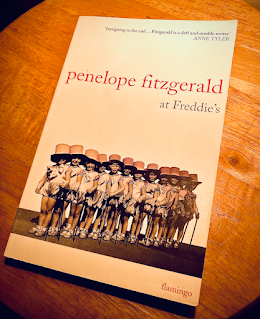
"Why, she wondered, was Edward always trying to get her into soapy water? It must have some connection with his days at boarding school; he probably thought it more hygienic to do it in the bath.
She didn't know why she felt so despairing inside. All the big issues were over and done with - it wasn't likely now that she'd get pregnant and even if she did, nobody, not even her mother, was going to tell her off. She didn't have any financial problems, she didn't hanker after new carpets. She didn't hanker after anything - certainly not Edward with a block of soap in one hand and that pipe spilling ash down her spine."
In My Canada Includes Foie Gras, Richler profiles ten chefs, including himself, and features signature menus from each. In this celebration of fine Canadian dining, the luminaries profiled include:
Rob Feenie (Vancouver)
Thomas Haas (Vancouver)
David Hawksworth (Vancouver)
Normand Laprise (Montreal)
Yvan Lebrun (Quebec City)
Mark McEwan (Toronto)
Frank Pabst (Vancouver)
Susur Lee (Toronto/New York)
Marc Thuet (Toronto)
Jacob Richler (Toronto)

From the evidence of Hitch 22, the notorious author and journalist has always been riddled with the same contradictions, conflict fetishism, allergy to boredom and bores (but not boors), and preference for emotion-fueled opinionizing over analytical thought that characterize his recent career as a neoconservative fellow traveler and professional crank.For more of me on the Hitch, see here.
Midway through the lecture it becomes apparent that many of the elders have not read Wallace before. You can tell when Wood reads aloud a particularly disturbing passage from BIHM and some of the older ladies crinkle their faces, their better-humored husbands guffawing resonantly. Later, when Wood glosses Wallace’s suicide, he is stopped mid-sentence by an elaborately coiffured lady in the front row, who demands clarification; when Wood explains that Wallace took his own life in 2008, the lady gasps and turns to her dozing husband.
 From TPM:
California Gubernatorial candidate Douglas Hughes (R) is running on a platform of expelling all convicted pedophiles from his state.
Don't worry though, Hughes has a plan for where they'll go: Santa Rosa Island, or as he calls it, "Pedophile Island."
Landing on an asteroid and giving it a well-timed nudge "would demonstrate once and for all that we're smarter than the dinosaurs and can avoid what they didn't," said White House science adviser John Holdren.
 My review of Lisa Moore's novel February is in the new issue of Canadian Notes & Queries.
Read it all here.“Without the reflection of characters scarred by traumatic events, such as war, depression, natural disasters and genocide, to name a few, Canadian literature would lose its essence, not to mention its most celebrated authors.”
That is one of the more harsh and sweeping (not to mention deadly funny and sadly accurate) condemnations of the current state of Canadian fiction I have come across in a while. It is not a Canadian invention, nor do we have any particular monopoly over it, but it does often seem that the Sensitive Person Remembers Bad Things novel is one of our literature’s specialties. As a literary culture, we are the Good Grandchildren, the ones who come to visit, bring treats, and sit patiently through stories of past hardships.
Unfortunately, the assertion quoted above was meant as a compliment....
Just before dawn on Thursday morning, Richard Code disappeared into the darkness and lit out for the Ontario wilderness, bringing little more than a few supplies and the skills he had learned from watching Survivorman, a reality show about subsisting in the bush.I have nothing much to add to this, other than that crass headline, and the fact that I've been a Survivorman fan for years (and have recently inducted my poor kids), and have never felt the urge to imitate the man - perhaps because pretty much the most exciting thing that ever happens in the show is that Les Stroud occasionally gets the runs from creek water. (Still, that's part of its charm.)
The 41-year-old left behind a note, asking his landlady to call police if he failed to return by Sunday night. On Monday, she reported him missing and on Wednesday afternoon, Code’s body was found in a marshy, snowed-in area just north of Huntsville.
A company called CereProc has taken voice samples from Ebert's DVD commentaries and created a computerized voice that Ebert can use to "speak." This could even lead to Ebert using the voice for other media, including podcasts, video, and commentaries.
Born on March 7, 1963, in the Midlands region of England, young Russell was quickly uprooted for a new life in Chalk River, Ont.
The 800-person village, which is home to Canada's premier nuclear research laboratory, was hiring experts - including Russell's father David Williams, a metallurgist.
David and his wife, Nonie, had another son, Harvey.
The marriage soured and they divorced. But in the remote and frigid Upper Ottawa Valley, Ms. Williams found love again, and married Mr. Sovka, in 1970.
Okay, so we aren't the most open-hearted and lively people, but come o-
Oh, they mean the place....
Yeah, it gets pretty cold up there. But hey, my dad worked in Chalk River, too (as did my brother), and I ain't never killed nobody. Yet.
Early fame can set very young actors on the road to notoriety and a mug shot-accompanied crack-up. The effect it has on youngish authors is much less dramatic, though similarly destructive. Sudden literary fame turns the essentially internal, intuitive and private act of writing inside out, exposing it to dangerous new strains of self-awareness.
For Zadie Smith, this fame has made for a full decade of second-guessing herself. When critic James Wood used a review of Smith's first, 2000 novel, White Teeth, to rail against what he called "hysterical realism," Smith, who was only 25 when that book was published, replied that the term was "painfully accurate ... for the sort of overblown, manic prose to be found in novels like my own." Even with two more novels under her belt, she still seems to be finding her way back either to the certainty of intent that made White Teeth such an anomaly, or, more likely, to some completely other authorial state of mind in which uncertainty and second-guessing are strengths, not weaknesses...
Even if I were more sympathetic than I am, however, it would still seem odd that the Star's Joe Fiorito seems to have forgotten he works for a newspaper:
S uppose the kid with the camera had given the picture of the sleeping token taker to the brass at the TTC. The correct response, in that scenario, would have been for the brass to make sure the token taker hadn't had a stroke or a seizure or a bad reaction to his meds.And then the brass should have thanked the kid with the camera for the picture, told him the matter would be dealt with, and given him a month-long pass, with an apology and the promise that they'd let him know the outcome.
If the picture was offered to the brass and ignored, then that's the story. But maybe it's not the story.
We all know it's not good to sleep on the job, especially if you work in public service.
I'm not defending the guy.
But if there was a crime, we should let the punishment fit it. What's the point of posting a picture where it can, as the kids say, "go viral?"
Have we made the world a better place? Or have we merely indulged in a drive-by shooting?
 I went to see these folks on New Year's Eve at the Dakota, and while there's definitely a bit of a schtick to what they do, it's a pretty good schtick and they don't go overboard with it, and they are a bucket of fun to see live. (Plus, I'm not exactly anti-schtick, by any stretch.)
The last time a Dutch filmmaker encountered a jihadist face to face he said "Can't we talk?" and was rewarded with eight bullets, near decapitation, and a crowing note from his murderer skewered by knife through his chest. By contrast, Mijnheer Schuringa jumped on the guy, got him in a choke hold, and dragged him away.Something tells me Mark has been privately recreating this scene in his basement, with him as Schuringa and an upstanding local lad who is working his way through college (and who greeted Mark at a nearby park with the offer of some company) playing Abdulmutallab.
Bubbling beneath the surface, therefore, are significant elements of [...] society fed up with their government, embarrassed by its foreign policy, and angry at its authoritarian ways. The dissident citizens are mostly young, urban and educated; the regime's supporters are mostly old, rural, poor and badly educated. Exceptions, of course, would include the business people who get rich on government contracts, and those employed in the various security services and the pro-government press or ministries.(See here if you were right.)
Read the whole thing here, if'n you like.If there is one word, one theme, that runs through all of Vladimir Nabokov's work, it isn't "beauty" or "sublimity" or "bliss" or any of the other possible candidates that might be offered up by his most ardent admirers (and almost all of his admirers are ardent).
Rather, the one word is "control." His fiction was supremely, proudly inorganic, every inch of it hostile to the idea of the happy accident or the free-willed character.
"Even the dream I describe to my wife across the breakfast table is only a first draft," he wrote in the foreword to Strong Opinions, a 1973 collection of his letters, occasional prose and interviews.
With an artist who is so defined by his own sense of control, there is a strong postmodern urge to get a look behind it, to catch the master in his underwear and find the vulnerable, beating heart beneath the aesthetic arrogance. The Original of Laura seems the perfect opportunity to sample that most improbable item: raw Nabokov. The novel – more a series of scenes, sketches and notes toward a possible novel or novella – was a work in progress at the time of the author's death in 1977.
Read the whole thing.Here's what a literary hullabaloo looks like these days: In its July/August issue, Quill & Quire magazine (full disclosure: I work there) ran a feature review of Lori Lansen’s The Wife’s Tale by author and Q&Q contributing editor James Grainger (full disclosure: he’s a friend). The review was mostly positive, praising Lansen’s “knack for satisfactorily ending one scene while creating anticipation for the next” as well as the novel’s “irresistible narrative thrust and character arc.” Grainger did find fault with the characterization, but concluded that, given the kind of book it is—i.e., mainstream and commercial—and given the intended audience, it wasn’t a big deal, and maybe beside the point.
In short, it was a review most authors would kill for.
However, Grainger made two errors. The first was getting some incidental facts wrong about the film rights to Lansen’s previous novel, a mistake duly noted and corrected when the review went online. The other blunder was a little trickier: by grouping the novel with the “big-hearted and story-driven” tales that tend to be favourites of book clubs, Grainger committed the Sin of Distinction, one that cannot be washed away by subsequent praise.
It's a modern version of sticking it to “the man.” Your employer isn't paying you enough so you raid the supplies cabinet or take a sick day when you are perfectly well. The store is charging too much for jeans so you slip a pair in your backpack without paying. The store is rich, after all, and you are poor. You are entitled.Quite right, Gee. Poor people using a loophole to get almost enough money to survive is exactly like someone shoplifting jeans.
In other words, the ends justify the means. If people are suffering and claiming a diabetic condition can get them more welfare money, why not help them claim it? The trouble is that dodges like that undermine the whole welfare system, reinforcing a public suspicion that people on welfare are out to fleece the system.Oh no - people in this province might start thinking badly of welfare recipients! In other words, it's all about not incurring the wrath of the fat assholes who think all poor people are lazy schemers. Not to be too class war-ish about it, but why is it that corporate execs never worry about all this "public suspicion" when it comes time to offer themselves bonuses or write off every expensive little perk at the taxpayer's expense?
From a profile of Chantal Kreviazuk in the TO Star:
The performer, who showcases her fifth album at Massey Hall on Tuesday, gets professional satisfaction writing hits for other performers, having her songs placed in movies and television, touring Canada every few years and lending her stature to humanitarian efforts.
As advocates of War Child Canada, which assists children affected by war, she and Maida walked the talk with the hiring of their nanny of six years, Bibiane Mpoyo of Burundi.
Charity begins at home, they say. What better way to demonstrate your firm commitment to an issue than to hire someone affected by it to do menial labour? I have friends who need some landscaping done - anyone know any Somali refugees?
I like this, too:
"Living with a war refugee is really intense, it's a risk every day," said Kreviazuk. "And there are days where something inappropriate happens. It's not age appropriate, or I know that she can't leave what's happening back home at the end of the canyon on her way into our house. There's a lot of understanding and patience that has to happen, but what she brings into our lives couldn't be without her experiences and we're gaining something far more valuable than what is being risked."
Yeah, Bibiane can be a bit of a pain now and then, what with the sensitivity to loud noise and the "boo hoo, my whole family was butchered before my eyes!", but hey, who doesn't get a little emotional at the end of an 18-hour day?

It’s nearly impossible to explain how technically accomplished, nuanced, fully-felt, and flat-out-fine a book A Week of This is without having praise sound laborious and monotonous. Whitlock’s prose is unassuming but never boring, stripped of any flourishes that would alienate his characters from the voice describing them.(I don't know about never boring, but hey - different strokes)

It isn’t that Dylan has magical powers or that he is laying hands on paralyzed people and enabling them to walk again. It is that perhaps more than any other living performer, there are such mythic investments placed within Dylan, and amazingly he manages to live up to them. His stage is a rare setting where myth and reality seem to meet. They dance together to the tune of rusty blues guitar. The razorblade-throated singer tightens their entanglement by documenting outlaw population groups who are submerged from the greater polity, and respond with a spirituality that is stoked in the fires of hell and ready to burn the unrighteous.That last sentence makes no literal sense. (And don't say, "Neither does Dylan, man...")


It’s very, very late in the day to make a fuss about Bob Dylan’s voice, though whole flocks of second-rate comedians and online jokesters are still making damp hay about it. At this point, nearly a half-century into the man’s singing career, pointing at that Dylan’s pipes lack the range of Judy Garland and the sweetness of The Beach Boys is not exactly going to set the collective jaws a’dropping. Notions of “authenticity” in pop music are often only reductive, snobbish constructs, but there is a kind of music lover who, in part thanks to the work of Mr Dylan, both as a singer and as a lifelong proponent of oldey timey music, prefers a throat full of frog than a velvet fog.
But still: even full acceptance of Dylan’s characteristic croak and whine can be strained. Personally, I could never take the sneezy nasality of “Lay Lady Lay.” I’d rather he shouted the thing in my ear in a fake German accent than whistle it, as he did, through one nostril. Thankfully, he rarely went there again.
Lately, he has been settling into a kind of growl/grumble that suits perfectly the jumped-up country blues he’s been sitting on for the past few records. The early reediness had given way to something closer to Joe Cocker or Tom Waits. If you occasionally feel like sucking on a Lozenge a few tunes in, that’s a small price to pay.
And then along comes Christmas in the Heart, Dylan’s new, 100% un-ironic collection of yuletide tunes, and all of a sudden, the man’s voice has become a question again....
A very subtle and funny writer - one I've become obsessed with over the past year - in a decidedly Muriel Spark mood. Imagine The Pr...